






Kenya’s urban landscape is changing faster than the systems designed to manage it. Low-rise buildings are giving way to taller residential and commercial developments as neighbourhoods grow denser, land faces increasing pressure, and housing demand reshapes cities and towns.
This transformation is not inherently a problem. Growing cities need more homes, offices, shops, schools and public facilities. Higher-density development can use land efficiently, support public transport and bring services closer to residents.
The question is whether infrastructure, planning and regulatory systems are keeping pace. Recent events in Nairobi have sharpened that concern.
On October 23, an 18-storey building under construction collapsed in Eastleigh, prompting a rescue operation and renewed scrutiny of construction approvals, inspections and enforcement. By November 5, eight deaths had been reported, and 16 people remained missing.
Days later, residents of a Riruta Satellite building were evacuated after dangerous cracks raised structural-safety concerns. Nairobi County and the National Construction Authority ordered residents to leave while they investigated. Authorities later sealed the building, and tenants were given supervised access to retrieve their belongings.
The incidents differ, and investigations must establish what happened in each. Together, however, they raise a broader public-interest issue: building safety cannot rely solely on developers’ intentions or occupants’ assurances. It depends on decisions, professional responsibilities and public oversight working before a structure becomes dangerous.
A Permit Is Not A Safety Guarantee
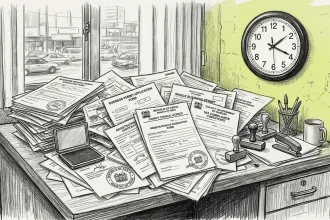
The Eastleigh collapse has raised questions about development approvals and regulatory enforcement, including the project’s architectural plans, change-of-use process, National Construction Authority (NCA) registration, and required approvals.
Nairobi Governor Johnson Sakaja said the county had not approved the plans and had attempted to enforce compliance, while the NCA said it registered the project in July 2025. Official records and ongoing investigations must establish the sequence of approvals, registration, enforcement and construction.
These processes are distinct: NCA registration is not county development approval, and neither proves construction followed approved designs. A project may meet one administrative requirement and fail another.
County governments oversee development control and building approvals; the NCA regulates the construction industry and registers projects. Architects, engineers, contractors and other professionals have defined duties, and buildings must meet requirements before occupation.
The National Building Code 2024 sets standards for design, construction, safety and inspection. An occupation certificate confirms a completed building meets applicable conditions for use.
The issue is whether rules are consistently applied, inspections are meaningful, and violations are addressed before people are endangered.
Who detects construction beyond approved plans or halts work after an enforcement notice? Who stops premature occupation, and do regulators have the resources and legal authority to secure compliance?
These are questions of institutional performance, not just construction technique.
Cost Of Weak Enforcement Is Paid By Residents
Regulatory failures can do more than cause collapses. Unsafe construction can wipe out savings, displace families, disrupt businesses and strain emergency services.
Evacuated residents may suddenly lose access to their homes and face uncertainty over rent, temporary housing and belongings.
Tenants are especially vulnerable because they often lack information about building approvals, designs and inspections.
They may rent a flat and pay a deposit without being able to verify that it is approved or safe.
This information gap belongs in policy discussions. Residents should not have to identify structural defects or obtain official records when they lack the expertise and access to do so.
The Architectural Association of Kenya’s Mulika Mjengo initiative shows how public participation can support oversight. Its 2025 report, Is That Building Safe?, documented public reports and site inspections in Nairobi, giving residents a way to flag potentially unsafe developments.
Such efforts should complement — not replace — public regulators. Residents can report suspicious construction, but cannot conduct professional inspections, enforce planning rules or prosecute violations.
Oversight must also address hazards short of collapse, including cracks, unauthorised extensions, blocked routes, inadequate fire exits, poor drainage and unsafe wiring. A city that acts only after a building fails intervenes too late.
Planning Must Keep Pace With Development
Nairobi’s building-safety debate is also about planning. Housing demand, jobs and transport access make land in high-demand neighbourhoods increasingly valuable, encouraging developers to maximise plots.
Higher density can support a sensible urban future, but only with adequate roads, water, sewerage, drainage, waste services, emergency access and public facilities.
Even a structurally sound building can make a neighbourhood unsafe if its infrastructure cannot support residents.
Building approvals must therefore be tied to physical planning. County governments need reliable records of development, approvals and construction, and must assess whether local infrastructure can cope.
Planning, building inspection, fire safety, public health and disaster management also require coordination.
A credible city-wide programme should maintain a transparent, regularly updated register of buildings and projects, noting approved use, floors, responsible professionals, inspections and occupancy while protecting legitimate personal and commercial information.
Prioritise inspections of high-risk buildings, including those with visible defects, unauthorised extensions, questionable approvals or premature occupation. Findings should trigger deadlines, follow-up inspections and proportionate sanctions for continued violations.
Authorities must also explain what happens to residents when buildings are condemned. Necessary evacuations should include clear reasons, risk explanations, instructions and coordinated access to essential belongings.
If residents are displaced because a developer or landlord broke the law, responsibility for their losses must not vanish into administration.
Safety Is Part Of The Urban Development Promise
Kenya’s cities need more housing, better land use and predictable rules that let responsible developers invest without being undercut by those who ignore planning requirements, compromise structural standards or bypass inspections.
That takes more than post-tragedy crackdowns. Regulators must identify violations early, professional bodies must enforce standards, counties must maintain accurate records, and breaches must face consequences proportionate to the risks.
The Eastleigh investigation should establish both the technical cause of the collapse and the administrative decisions that enabled it. The Riruta evacuation should explain how the building was approved, occupied and monitored, and whether warning signs were missed.
These findings should inform a broad review of urban construction, not another inquiry whose recommendations fade from view.
Urban growth signals economic and social change, but counting floors, buildings and housing units alone cannot measure progress. Development must also ensure people can live, work and travel without avoidable risks.
Nairobi’s growth will be judged not by how fast it builds upward, but by whether its institutions make safety a condition of development — not a concern raised after disaster.