


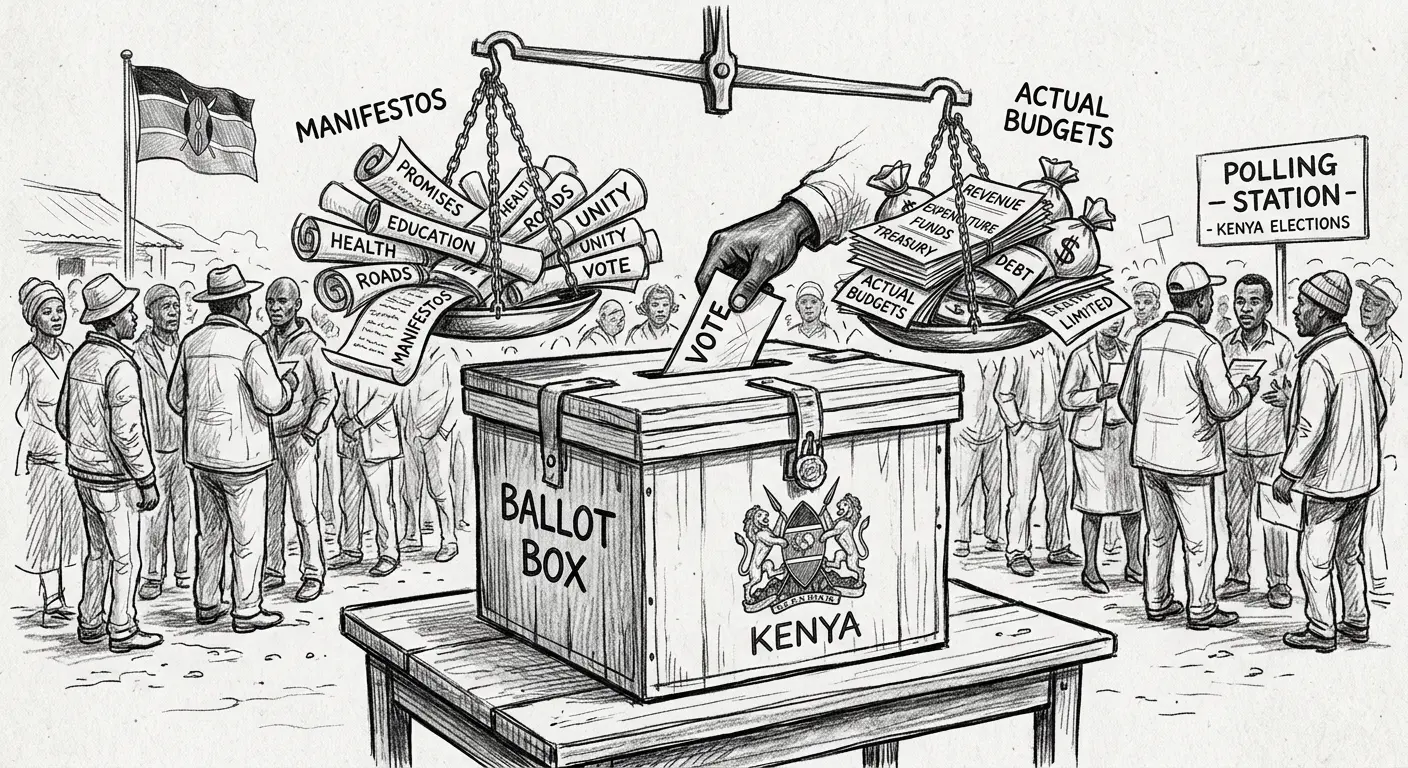
The 2027 election may decide who occupies State House as president, but it will not erase the fiscal, employment and institutional constraints that will confront the next administration.
The political competition of 2027 is gradually taking shape around personalities, alliances and competing visions of who should govern Kenya, but beneath the coalition arithmetic lies a less dramatic and more consequential reality: whoever wins the presidency will inherit a country in which many of the easiest policy choices have already been exhausted.
The next president will inherit an economy that is growing, but not fast enough to make households feel the benefits of that growth; a government that continues to invest in infrastructure and social programmes, but whose fiscal room is constrained by debt; and a young population whose aspirations are rising faster than the state can meet them.
Kenya’s real GDP grew by 4.6 per cent in 2025, according to KNBS, following 4.7 per cent growth in 2024. That is hardly an economic crisis, and several sectors recorded strong expansions, but it also does not represent the kind of sustained acceleration that can rapidly transform living standards across a population that continues to grow.
The next government will therefore face a deceptively difficult task: it will need to accelerate growth while simultaneously exercising fiscal restraint. Those objectives can coexist, but they require a level of policy discipline that election campaigns rarely reward.
2026/27 Fiscal Framework
Kenya is working with a projected deficit of 5.5 per cent of GDP, while its medium-term objective is to bring the deficit down towards 3 per cent by 2028/29. The Finance Ministry has also indicated a projected deficit of 3.6 per cent for 2027/28, suggesting that fiscal consolidation will be central to the next administration’s economic inheritance.
That means the president elected in 2027 will not enter State House with an empty notebook, as major spending commitments will already exist. Debt repayments will already be scheduled. Infrastructure projects will already be under construction.
Social programmes will already have beneficiaries who expect them to continue. Counties will continue demanding resources. The health system will continue requiring money. Education will continue consuming a substantial share of public expenditure.
The political temptation will be to promise that a new administration can simply rearrange everything, but the economic reality is that it cannot. The next president may change priorities, renegotiate contracts, eliminate waste and reform institutions, but the underlying obligations of will remain.
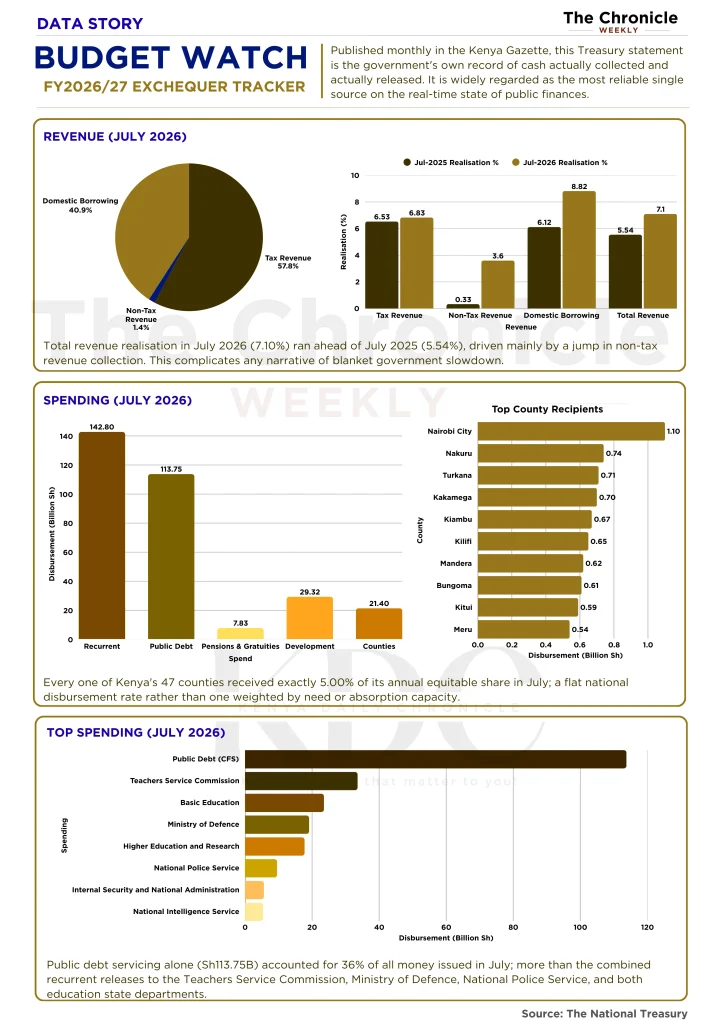
The 2026/27 budget allocates about Sh1.54 trillion to public debt-related costs, according to the Budget Policy Statement, up from Sh1.44 trillion in the previous financial year.
Within the financial statement, interest payments alone account for hundreds of billions of shillings, including nearly Sh987 billion for domestic debt and about Sh268 billion for external debt.
That debt or demand for services does not vanish simply because a new president is elected. The next administration will confront the same fundamental equation that has challenged the current one: citizens want better services and lower costs, and the government needs more revenue and less debt.
There is no political slogan capable of eliminating that contradiction, and this should change how the 2027 political debate is framed. The question should not simply be how many jobs a candidate promises but what kind their policies will produce.
A country cannot build a prosperous middle class on employment that leaves workers vulnerable to income shocks, limited social protection and weak access to credit or long-term savings.
Nor can it finance an ambitious welfare state if a large proportion of the working population remains outside the formal tax and social-security systems.
The next president will therefore need to pursue something more difficult than job creation, and the task will be to make the economy more productive.
That means creating the conditions where informal enterprises can grow into formal businesses rather than simply taxing them when they become visible.
It means making manufacturing competitive, agriculture more productive, energy more reliable and logistics more efficient.
It means ensuring that digital transformation creates higher-value economic activity rather than merely shifting existing consumption online.
It also means accepting that the government cannot create all the jobs, and the private sector must do much of the heavy lifting, which in turn means the next administration will have to decide whether it wants to treat business primarily as a source of tax revenue or as an engine of national development.
Kenya’s private sector cannot be expected to create millions of jobs while simultaneously absorbing every increase in taxation, energy costs, regulation and compliance.
At the same time, businesses cannot expect the government to provide infrastructure, skilled workers, security and public services indefinitely without contributing to the revenue base.
Managing The Bargain
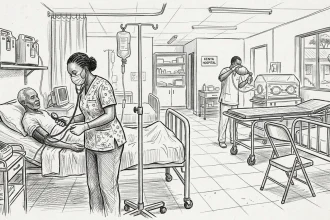
Kenyans want a healthcare system in which illness does not destroy household finances, while the government wants to move towards universal coverage through the Social Health Authority.
However, a sustainable health system requires more than enrollment figures and contribution mechanisms.
It requires reliable financing, hospitals capable of delivering services, health workers who are paid on time and a system capable of preventing fraud and waste.
Kenya needs millions of additional homes, particularly in growing urban centres, but affordable housing cannot be created simply by announcing large construction targets.
It requires land, infrastructure, financing, purchasing power and employment that allows households to actually afford the resulting homes.
Kenya can continue building roads, railways, stadiums, energy projects and other infrastructure, but the question increasingly has to become whether each project generates sufficient economic value to justify its cost and future maintenance burden.
That is the standard the next government should apply to every major project; not whether it photographs well or it can be opened before an election.
But whether it improves productivity, creates economic opportunity and continues to provide value long after the political leaders who commissioned it have left office.
Beyond Vision 2030 Conversation
The government has explicitly argued that Kenya’s next development vision should transcend electoral cycles and create continuity across administrations, with the State Department for Economic Planning emphasising policy continuity, institutional stability and innovative financing during the August 12 national conversation.
That is a worthwhile principle, but continuity cannot mean simply carrying every existing programme forward.
It must mean preserving what works, correcting what does not and abandoning projects that no longer make economic or social sense, and the next president will need precisely that kind of discipline.
The political opposition will naturally campaign on what is wrong with the current administration, just as the incumbent side will point to infrastructure, digital services, investment and other achievements.
Both approaches will be incomplete if they avoid the deeper question of what happens after the election.
The next government will still have to pay the debt, raise revenue, create jobs, fund healthcare, educate millions of children, maintain roads and energy systems, manage the demands of counties, and to respond to climate shocks, global economic volatility and a rapidly changing labour market.
It will have to do all this while citizens are demanding lower taxes and better services at the same time.
That is why 2027 should not be judged solely as a referendum on the current administration but a contest between competing explanations of how Kenya works.
The serious question for every candidate should be: Given the Kenya you will inherit, what exactly will you do differently, how much will it cost, what will you stop doing, and what will you ask Kenyans to sacrifice in return?
Those questions may not make for the most exciting campaign rallies but may be the ones that determine whether the next five years are merely another political transition or the beginning of a different economic trajectory.
Kenya has reached a point where changing the people in charge will not, by itself, change the country’s fundamental constraints, and the next president will have to do more than win.
They will have to govern a country that has become too expensive to promise everything to, and too ambitious to settle for less.