

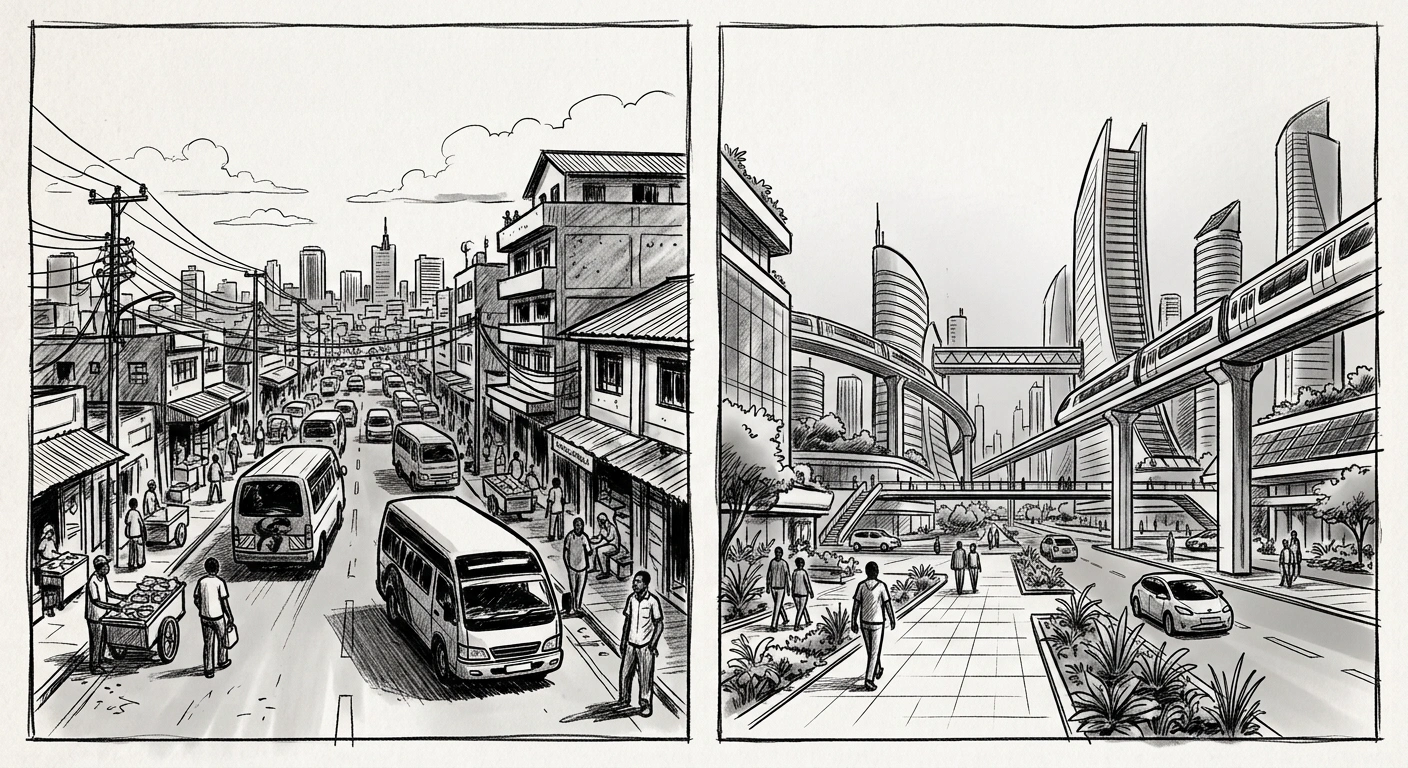
Kenya has never lacked ambition, and as it seeks to develop its Beyond 2030 Vision, the question is now whether the state, the economy and households can afford the country it is trying to build.
There is a particular contradiction at the heart of Kenya’s development conversation in 2026. The country is talking about the next 30 years at precisely the moment when the government, businesses and households are being forced to think much more carefully about the next 30 days.
On August 12, Kenya formally began the national conversation on what comes after Vision 2030, with the government presenting the exercise as an opportunity to imagine a prosperous, industrialised and globally competitive country by 2060.
The process is deliberately being framed as broader than a government plan, with the State Department for Economic Planning saying that citizens across all 47 counties are expected to participate in determining the country’s long-term development direction.
The ambition is difficult to fault. Kenya should indeed be thinking beyond the immediate political cycle, because a country of more than 54 million people cannot build its future one five-year election period at a time.
The problem is that the distance between the Kenya being imagined and the Kenya that must finance that ambition is becoming increasingly difficult to ignore.
The question facing the country is therefore not whether Kenyans should dream bigger. It is whether the country can build the institutions, jobs, tax base, productivity and public finances required to turn those dreams into something more tangible than another generation of policy documents.
The ‘Expiring’ Vision
Vision 2030, launched in 2008, was an ambitious attempt to transform Kenya into an industrialising, middle-income country by 2030. It created a framework for economic, social and political transformation and helped give successive governments a language to describe infrastructure, manufacturing, technology and human capital.
However, as the country approaches the end of that planning horizon, the conversation about its successor is arriving with a rather different economic reality. Kenya’s economy grew by 4.6 per cent in 2025, down marginally from 4.7 per cent in 2024, according to the 2026 Economic Survey.
That is respectable growth, but it is not the kind of acceleration that transforms household living standards in a country whose population continues to expand and whose working-age population is growing rapidly.
Construction rebounded strongly, expanding by 6.8 per cent, while accommodation and food services grew by 15.6 per cent, financial and insurance activities by 6.5 per cent and information and communication by 4.8 per cent.
The headline growth rate, however, conceals another important reality: Kenya is creating work faster than it is creating secure employment. The 2026 Economic Survey estimates that total recorded employment reached 21.6 million people in 2025, up from 20.8 million the previous year, with 822,100 additional jobs created.
About 87.2 per cent of the new jobs were generated in the informal sector, which accounted for about 18.1 million jobs compared with roughly 3.5 million in modern jobs and other formal employment. This is perhaps the most important number in the country’s long-term development debate.
A country cannot become a high-income economy merely by creating more economic activity. It must create sufficiently productive economic activity to raise incomes, expand the tax base, improve household resilience, and allow workers to move from survival-oriented employment into more secure and productive occupations.
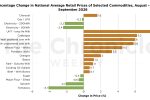
Annual consumer inflation reached 6.5 per cent in July 2026, according to the Kenya National Bureau of Statistics, with food and non-alcoholic beverages, transport and housing-related costs continuing to exert pressure on household budgets.
For policymakers, 6.5 per cent is a macroeconomic indicator. For a household, it is an argument over what gets postponed when the money runs out before the month does. This is where the country’s long-term vision meets its immediate economy.
Kenya wants better hospitals, schools, affordable housing, modern transport systems, reliable electricity, industrial parks, digital infrastructure, food security and millions of productive jobs.
It also wants a government capable of providing social protection to citizens who cannot participate fully in the market.
All of those objectives are defensible individually, and the difficult question is what happens when they are placed together on the same balance sheet.
Budget Constraints
The 2026/27 national budget provides a useful illustration of that problem. The government’s financial statement projects ordinary revenue of about Sh2.99 trillion, recurrent expenditure of Sh3.58 trillion, and development expenditure of about Sh810 billion.
More than Sh1.5 trillion is allocated under Consolidated Fund Services, including interest on domestic and external debt, pensions and other obligations. Domestic debt interest alone is budgeted at nearly Sh987 billion, while foreign debt interest is about Sh268 billion.
The government is therefore trying to finance development while carrying a very large historical bill. Its 2026/27 borrowing plan makes the tension even clearer. The National Treasury is targeting a fiscal deficit of 5.5 per cent of GDP, with net external financing of Sh247.2 billion and the balance coming largely through domestic borrowing.
At the same time, the government is exploring a range of financing instruments, including a possible $300 million panda bond, an $815 million Eurobond and more than $500 million from the Japanese market, while seeking to retire at least $500 million of expensive external debt.
The government is not necessarily wrong to seek cheaper or more diversified financing. A growing economy requires capital, and development cannot be funded entirely from today’s tax receipts.
But the financing question cannot be separated from the development question. Every shilling borrowed today creates a future obligation, while every tax increase creates a present burden.
Every public project creates maintenance costs after construction, while every new government programme creates expectations that future administrations may find difficult to unwind.
This is why the Beyond Vision 2030 conversation deserves to be much more than another national consultation exercise. It should force Kenya to answer the questions that development plans traditionally prefer to leave in the background.
What kind of economy will finance the country we want? How many productive jobs will it need? How large will the tax base have to become? How much debt can the economy sustainably carry?
Which services should be provided by the government or the private sector and which through partnerships between the two? What should Kenya stop doing to afford what it says it wants to do?
These are not technical questions for economists alone, but ultimately questions about the quality of life Kenyans will experience.
If Kenya builds a world-class road network but households cannot afford to use it, the infrastructure has not solved the entire problem.
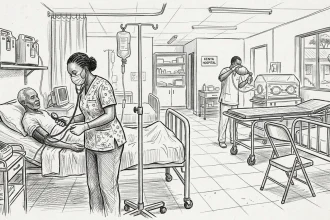
If the country builds hospitals but medical costs remain prohibitive, physical infrastructure alone cannot deliver universal healthcare.
If it creates universities but graduates enter an economy where most new work is informal and low-productivity, education alone cannot deliver economic mobility.
The central challenge is therefore not simply to build more but to build an economy capable of sustaining what it builds.
That distinction is particularly important because Kenya is entering a period in which political incentives are likely to pull in the opposite direction.
The closer the country moves towards the 2027 election, the greater the temptation for political competitors to describe the future in terms of what the government should provide rather than what the country can sustainably finance.
That is understandable politics, but dangerous economics.
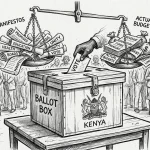
A manifesto that promises universal healthcare, cheaper housing, more jobs, lower taxes, higher wages, better infrastructure and expanded social protection may sound attractive, but the credibility of such a programme cannot be judged by the number of promises it contains.
It has to be judged by its financing model, its implementation timetable and the trade-offs it is willing to acknowledge. This is where Kenya’s new long-term conversation can become genuinely transformative.
Ambitions vs Reality
The most useful national vision would not be the one containing the largest number of ambitions. It would be the one that establishes a hierarchy of priorities and explains how the country will pay for them. That means confronting an uncomfortable truth: Kenya cannot afford to do everything at once.
The country will have to decide which investments produce the highest economic returns, which public programmes are essential, which subsidies are sustainable, which institutions need reform and which projects should be abandoned when they no longer make economic sense. It will also have to confront the other side of the equation where Kenya cannot tax itself into prosperity.
A sustainable development model requires businesses capable of expanding, workers earning more, firms investing more, farmers becoming more productive and households accumulating assets rather than simply servicing monthly expenses.
That is why the 87.2 per cent share of new jobs created informally in 2025 matters so much, as it tells us that the country’s fundamental economic challenge is not merely unemployment; it is the quality and productivity of the economic opportunities being created.
As we argued in Issue 11, the Kenyan middle class has not disappeared, but it increasingly operates through multiple incomes, debt, side hustles and careful trade-offs.
The next phase of development must therefore be judged not simply by whether national income rises, but by whether households become more financially resilient.
The purpose of a 2060 vision cannot be to produce an impressive document that government officials unveil every few years while citizens continue to improvise around the failures of the present.
Its purpose should be to create a country in which a child born today has a substantially greater probability of finding productive work, living in secure housing, accessing quality healthcare, receiving a good education and accumulating enough wealth to withstand economic shocks.
That is an ambitious goal and in all measure an expensive one, and Kenya should not be afraid of either fact.
The country should dream about the Kenya it wants to become, but it should also be honest enough to publish the price tag.
Because the real test of the national conversation will not be whether Kenyans agree that they want a richer, fairer and more prosperous country.
The real test will be whether we can agree on what must be done first, what must be sacrificed, who must pay, and how we will know that the money was actually worth spending.
That is the conversation Kenya now needs.