


The central weakness of the Ruto presidency is not that nothing has happened. Quite the opposite: too much has happened for that argument to survive serious scrutiny. The problem is that much of what has happened has not adequately answered the question that brought William Ruto to power.
The 2022 election was won on an unusually direct diagnosis of Kenya’s economic problem. The country, Ruto argued, had been designed to work from the top down, leaving the hustler, the small trader, the farmer and the young unemployed Kenyan carrying the costs while those at the top captured the reward.
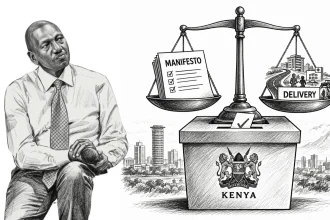
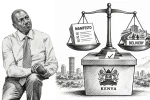
Bottom-Up Economics was therefore more than a collection of programmes. It was a promise about whom the economy would work for. Four years later, that promise has become difficult to locate inside the government’s preferred language of delivery.
Mechanism Behind The Gap
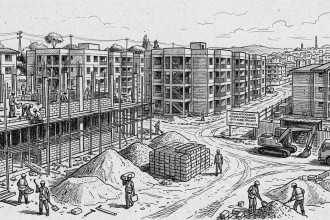
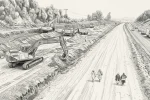
The pattern here mirrors, and inverts, the companion piece in this issue. Where delivery succeeded, it did so in domains the state could control directly: construction, subsidy disbursement, connections.
Every failure below sits on the other side of that line: cost of living, debt service, labour markets and the state’s own conduct are outcomes the state can influence but not dictate. That is not an excuse. It is the explanation for why an administration with a genuine delivery record can simultaneously be experienced by most Kenyans as having changed very little.
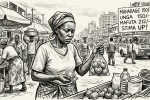
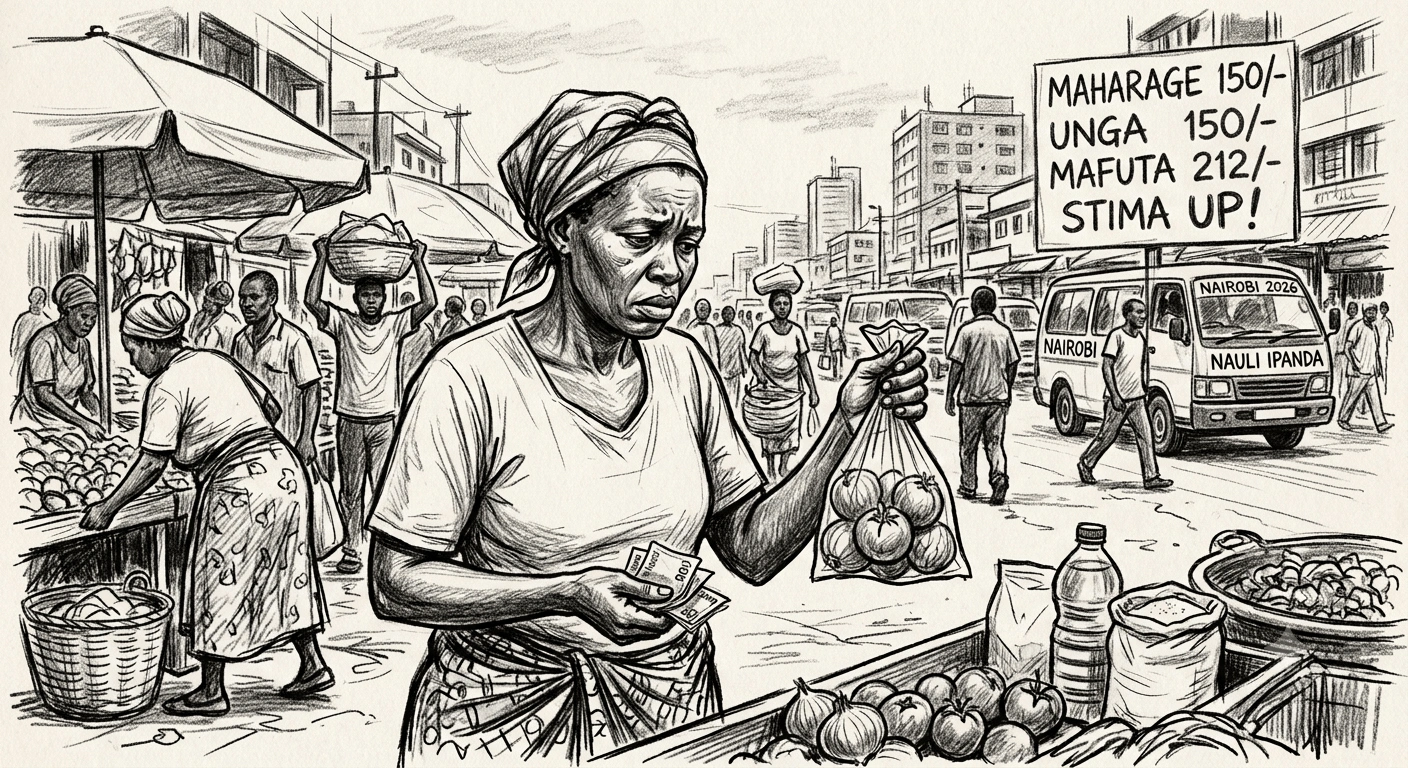
The most damaging gap between the presidency’s narrative and the citizen’s experience remains the cost of living. There is a legitimate argument that the administration inherited a difficult economic environment, that inflation has moderated from the extraordinary highs of 2022 and 2023, and that macroeconomic stabilisation matters even without immediate improvement in household welfare.
Inflation has fallen from about 9.6 per cent in 2022 to 6.6 per cent by August 2026. But an inflation rate falling from a high level does not mean prices return to where they were.
Ruto came to office promising to change how Kenya borrows and spends. Four years later, debt remains one of the central constraints on the state while the administration’s own fiscal position continues to face substantial financing pressures. The issue is not simply the size of the debt stock. It is what debt does to the government’s room for manoeuvre.
Debt service competes with development spending. Expensive domestic borrowing affects businesses and households. Tax increases become politically unavoidable when revenue targets are missed, but higher taxation can simultaneously weaken consumption and investment. This is where the Bottom-Up promise encounters the fiscal reality.
A government cannot sustainably make the economy work for the small trader while continuously increasing the cost of doing business, nor can it create mass prosperity simply by reallocating money within a constrained budget.
SHA: The Troubled Implementation
Health may be the clearest example of the difference between institutional ambition and lived experience. The transition from NHIF to the Social Health Authority was to solve a genuine structural problem: how to create a broader, more sustainable financing mechanism for universal healthcare.
By June 2026, more than 29 million people had registered, and this is not a trivial achievement. But registration is not healthcare. The administration has struggled with delayed reimbursements, provider onboarding, payment disputes and confusion among patients and facilities.
The result is a reform that can simultaneously be ambitious in design and frustrating in operation, and this distinction runs through the four years. The government has often been strongest at announcing and building systems, but weaker at ensuring that those systems work seamlessly once ordinary citizens encounter them.
Jobs Remain The Unanswered Question
The government can point to digital jobs, overseas labour opportunities, manufacturing investments and programmes such as Ajira. It can point to hundreds of thousands of young people trained for digital work and to new investments designed to expand productive capacity.
But young Kenyans do not experience the labour market through government announcements. They experience it through whether they can find work, whether that work pays enough to live on and whether there is a credible path from temporary income to economic independence.
The 2026 voter registration surge brought millions of new voters into the electoral system, with younger citizens concerned about jobs, opportunity and affordability rather than the coalition arrangements that dominated the 2022 contest.
The man who built his political identity around speaking for the economically excluded cannot afford to be judged only by the number of programmes created for them but by whether their economic position actually improved.
Accountability: Record Beyond Receipts
There is a weakness that cannot be measured in kilometres of roads or numbers of houses: how the state exercised power, and how it answered for that exercise, when citizens pushed back.
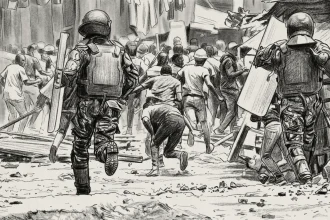
The June 2024 protests are the hinge event of this presidency, and their significance is not only in what triggered them — the Finance Bill — but in what followed. Reports of enforced disappearances and abductions of government critics, activists and protesters in the months after the protests became a recurring feature of the presidency’s second half.
A state’s response to dissent, whether it uses lawful force proportionately, whether it investigates its own conduct, whether officers implicated face consequences, is itself part of the delivery record, even though it produces no ribbon-cutting
The administration’s critics extend this into a broader constitutionalism argument: that executive impatience with judicial rulings, contested IEBC appointments, and pressure on civil society and independent media form a pattern rather than isolated incidents.
The administration’s defenders counter that a government facing sustained, sometimes violent protest cannot be expected to treat every enforcement as a violation, and that Kenya’s courts and oversight bodies have continued to function and rule against the executive on multiple occasions.
Both arguments deserve to be tested against the documented record rather than asserted. What is not contestable is that a four-year scorecard measured only in units, kilometres and connections would be incomplete.
The 2024 protests and their aftermath are part of the Ruto record in the same way housing units and electricity connections are — the difference is that this part of the record cannot be resolved by a commissioning ceremony, and it cannot be dismissed as an opposition talking point either.
The administration’s defenders are right that governments must govern rather than spend four years responding to every criticism. Its critics are right that development cannot become a substitute for accountability. The two responsibilities are not mutually exclusive.
Failure Was Not Ambition
Perhaps the fairest criticism of Ruto is therefore not that he failed to govern, but that he promised a transformation whose scale exceeded what the state could realistically deliver within one term.
The original Bottom-Up proposition was emotionally powerful because it offered Kenyans more than projects. It promised a different economic relationship between the citizen and the state.
Four years later, the government has a respectable record of implementation but a less convincing record of transformation. That is why its greatest political achievement and greatest political weakness are strangely connected.
Ruto has built enough to make the claim that nothing has changed impossible. But he has not changed enough to make the claim that Kenya has been transformed equally convincing. And that is the argument that will matter most in 2027.
The question will not be whether Ruto has done anything. He plainly has. The question will be whether he has done enough — and whether what he has done has reached the people who were promised that the economy would finally work from the bottom up. Housing and infrastructure are rated strong, agriculture and digitisation improving, SHA and jobs mixed, while cost of living and public debt remain weak.
That is not a failed presidency or a triumphant one either. It is a presidency whose strongest achievements are increasingly visible, whose failures remain deeply felt, and whose unfinished promises may ultimately decide whether Kenyans give William Ruto another five years.