



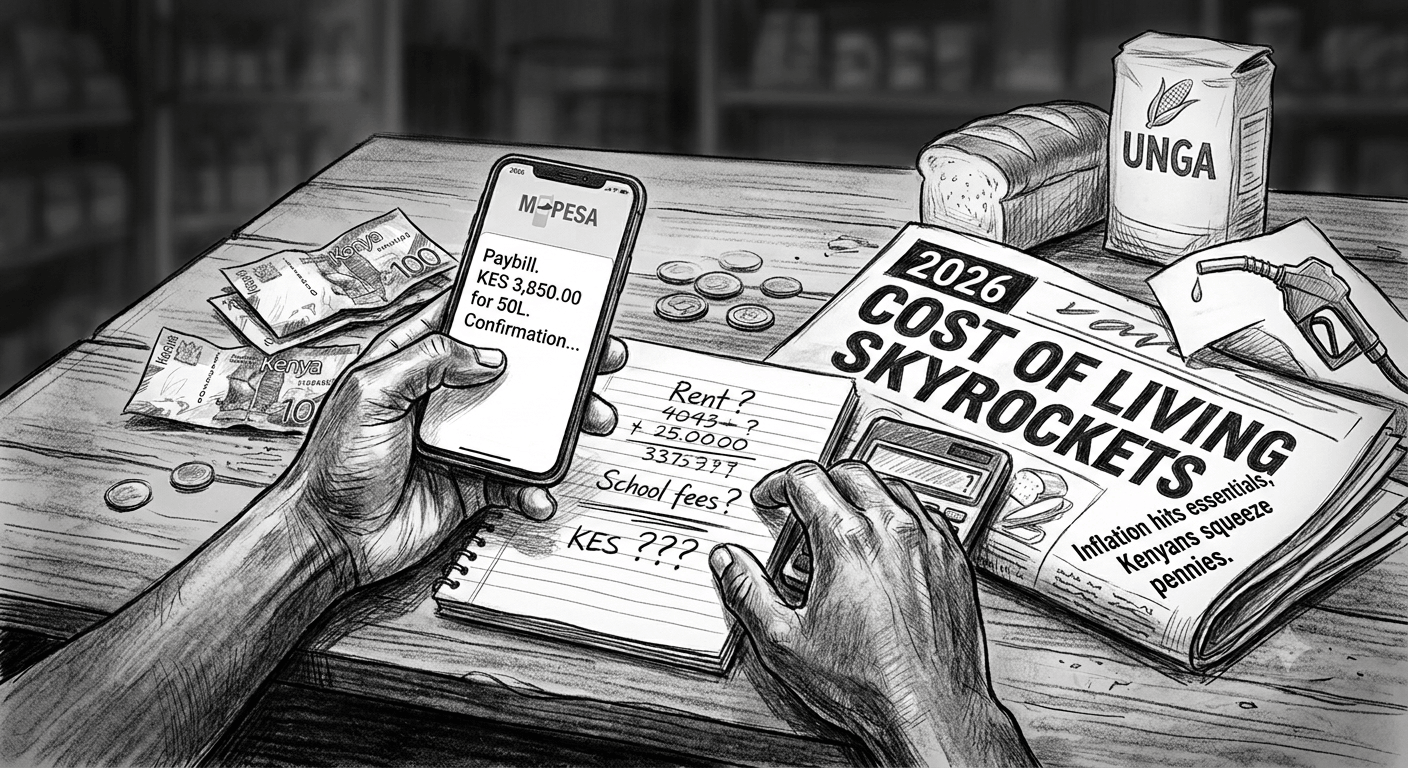
The 2024 anti-Finance Bill protests quickly evolved from a tax revolt into a nationwide expression of frustration over the rising cost of living, shrinking purchasing power, and a growing sense that the economy was no longer working for ordinary citizens.
Two years on, some of the specific tax proposals
that sparked the unrest have been withdrawn. The underlying pressure they reflected has not.
The Food Basket
As 2026 opened, KNBS data showed food and non-alcoholic beverages prices had surged 7.8 per cent over the year, the sharpest increase among all major spending categories, and the single largest contributor to overall inflation.
The headline inflation number obscures how unevenly that pressure lands on specific staples.
Potatoes rose to Sh94.99 per kilogramme, up 8.3 per cent year-on-year. Tomatoes reached Sh87.18 per kilogramme, a striking 30.3 per cent higher than the previous year. Beef with bones climbed to Sh719.29 per kilogramme, contributing to a 7.8 per cent annual rise in meat costs.
What Treasury Itself Heard
Presenting the 2026/27 budget on June 11, Treasury Cabinet Secretary John Mbadi acknowledged directly that household financial concerns were the dominant theme raised by Kenyans.
“The message from Kenyans across the country, from our rural villages to our bustling towns and cities, the ordinary mwananchi, is clear and
consistent,” Mbadi said. “Kenyans want an economy that works for them; an economy where the cost of living is manageable.”
He noted that Kenyans had also specifically called for lower taxes on essential commodities, reduced wastage of public resources, and a more decisive fight against corruption.
This is a government, in other words, that has directly heard and acknowledged the cost-of-living grievance from its own public participation process.
The question this piece asks is what that grievance actually looks like inside a household budget. By May 2026, the pressure had intensified rather than eased.
Inflation accelerated to 6.7 per cent, the highest since January 2024, with food, fuel, rent, and transport all rising simultaneously, a combination that left even economists describing a fragile situation for households whose incomes have largely remained stagnant.
The Deduction Squeeze
What distinguishes the 2026 cost-of-living story from earlier inflation cycles is the compounding effect of statutory deductions layered on top of rising prices.
Many salaried Kenyan workers are now absorbing simultaneous pressure from PAYE, SHA contributions, the Housing Levy, and increased NSSF deductions, a combination that is straining urban middle-income earners who fall outside government social protection programmes but are increasingly struggling to absorb repeated economic shocks.
This is the structural bind at the centre of the delivery election argument examined elsewhere in this issue: several of the government’s flagship delivery programmes are themselves funded by deductions that directly reduce the take-home pay households have available to absorb the food and fuel inflation hitting them from the other direction.
Transport and Fuel
Transport remains the expense most Kenyans notice first and most directly, for workers living outside city centres, commuting costs now rival major monthly bills, with a growing share of income going simply into getting to work.
When public service transporters staged a two-day strike over fuel costs, the government responded by lowering diesel prices by Sh10 a litre, but the relief did little to reverse the trend, as fares and other service costs had already been adjusted upward and proved sticky on the way back down.
Housing and Rent
Housing continues to shape household finances more than almost any other single cost category.
Once rent rises in Kenya’s urban centres, reductions are rare, meaning housing remains the most stable yet stubbornly persistent expense facing urban families; a dynamic that sits in direct tension with the Affordable Housing Programme’s stated goal of expanding access to lower-cost housing, examined separately in this issue’s business section.
The Electricity Tariff Decision
One of the more telling signals of government anxiety about cost-of-living pressure came in June 2026, when the Treasury froze a planned electricity tariff review that was due to take effect from July 1.
This decision was made explicitly to avoid hitting households and businesses with higher power bills amid the broader inflation surge.
The freeze suggests the administration recognises the political risk of compounding cost pressures on households even as it has, on other fronts, continued to extract new mandatory deductions through SHA and the Housing Levy.
Where the Numbers Sit Regionally
By early 2026, Kenya’s cost of living had risen
approximately 4 per cent compared to the previous year.
Within East Africa, Kenya ranked seventh by cost- of-living index, at 28.9, up from 28.2 in 2025, meaning living costs are rising faster than the regional baseline, even as Kenya remains less
expensive in absolute terms than several other
African capitals.
Reading This Against the Cover Story
This piece is not a contradiction of the delivery
narrative examined elsewhere in this issue; it is its necessary companion.
A government can simultaneously deliver visible infrastructure and preside over a genuine erosion of household purchasing power; both things are true in Kenya in 2026.
The anti-Finance Bill protests of 2024 may have succeeded in stopping some unpopular tax proposals, but they did not eliminate the underlying pressures that sparked public anger.
Instead, those pressures have migrated from the streets into the quiet, ongoing adjustments Kenyan families are making around their own kitchen tables.
That, more than any single statistic in the
government’s delivery scorecard, is the data point likely to shape how Kenyans vote in 2027.