





On the same evening that President Ruto signed the Finance Bill 2026 into law on June 23, he made an announcement that received less attention than it deserved: the government was committing Sh26.4 billion to sports infrastructure, with a significant portion earmarked for AFCON 2027 preparations.
Besides AFCON, the package covers rewarding Kenya’s outstanding international athletes and supporting sports competitions nationwide. It was the right announcement, the timing is questionable.
Kenya has twelve months. The 36th Africa Cup of Nations kicks off on June 19, 2027, co-hosted with Uganda and Tanzania. Two Kenyan venues have been confirmed to host matches: the Moi International Sports Centre at Kasarani and the Raila Odinga International Stadium at Talanta Sports City, while Nyayo Stadium has been designated a training venue.
Both match venues are under active construction. Neither is finished. And in March, CAF said so in terms that left no room for diplomatic interpretation.
What CAF Said
As of February 2026, none of the proposed competition stadiums in Kenya fully met CAF Category 4 requirements. Kenya’s AFCON 2027 infrastructure programme was described as being in a mixed phase of construction, upgrading and operational adjustments.
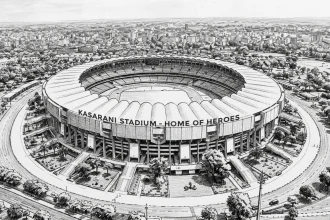
That is the language of a governing body trying to be measured while conveying urgency. The detailed requirements behind it are extensive. For Kasarani, CAF’s required upgrades include reconfiguring spectator circulation and segregation, relocating and restructuring the Venue Operations Centre, and installing a new lighting system compliant with 3,000 lux broadcast standards.
On top of those, CAF has directed Kenya to construct 61 skyboxes at the facility. Sports CS Salim Mvurya has since requested that CAF reconsider the skybox requirement, arguing that construction of 61 such units would significantly disrupt existing critical infrastructure at the venue and jeopardise Kenya’s ability to meet the completion timeline. That negotiation is ongoing.
At Talanta, the picture is more encouraging. Sports PS Elijah Mwangi confirmed in May that Talanta Stadium was past 88 per cent completion and expected to be ready by the end of June, with remaining works covering auxiliary infrastructure, including access roads and training grounds within the Talanta complex.
CS Mvurya subsequently confirmed that Talanta will be fully complete by the end of July.
The infrastructure commitments would be reassuring were it not for what happened earlier in the year. When Sports PS Mwangi appeared before the National Assembly’s Committee on Sports and Culture in March, he revealed that the contractor at Kasarani had reduced its workforce due to more than Sh3.7 billion in unpaid debt, while the contractor at Nyayo had left the site entirely, owing to more than Sh2.6 billion in debt.
Work does not stop when government enthusiasm runs low. It stops when government cheques do not arrive. The Sh4 billion injected by the National Treasury in June to fast-track civil works is being applied to address a broader Sh11 billion deficit threatening the regional tournament readiness deadlines across East Africa.
The new Finance Act allocation is the government catching up to a shortfall it allowed to develop, not getting ahead of the problem.
Eldoret’s Exit
The revised host city list is itself a measure of how far preparations had slipped. Kipchoge Keino Stadium in Eldoret has been removed from the final list of match venues entirely, after officials concluded it would not meet the stringent CAF infrastructure completion timelines. Prior evaluations indicated the facility stood at less than 20 per cent completion.
For a government that had consistently cited Eldoret as a symbol of upcountry investment in the tournament, quietly dropping it from the hosting schedule while announcing fresh billions for Nairobi venues tells its own story about which commitments were realistic and which were political.
Kenya, Uganda, and Tanzania have until December 2026 to complete their match venues. Before that date, Kasarani and Talanta must achieve completion levels of at least 60 per cent and 80 per cent, respectively, by August 2026, while training venues need to reach 75 per cent completion.
The August milestones are just six weeks away. With new funding now secured and Talanta nearing completion, the situation in Nairobi has significantly improved since March.
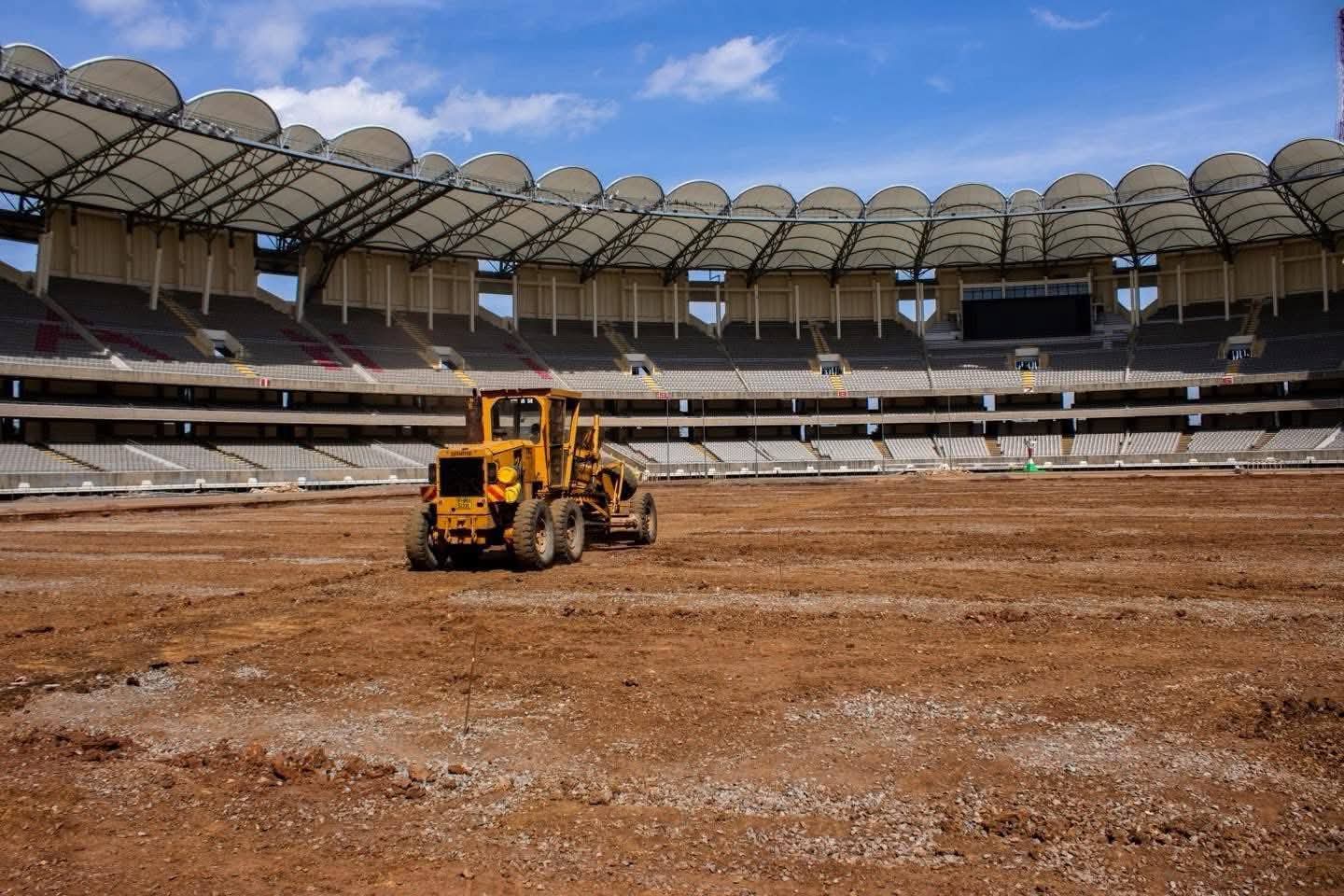
Kasarani’s Phase II renovations are in progress, with contractors actively engaged in intensive reconstruction of the main playing pitch under the technical supervision of Sports Kenya.
Kenya will certainly host AFCON 2027, and the stadiums are expected to be ready in due time. As we approach the final year, a more pertinent question arises: Can a country that required a Finance Bill signing ceremony to unlock previously committed infrastructure funding also ensure operational readiness, security, transport, hospitality, and broadcast infrastructure needed to transform a completed stadium into a fully functional tournament venue?