




Kenya’s 2027 election will not begin on the campaign trail. In an important sense, it has already begun in the budget process.
As it happened with the 2022/23 budget cycle, the government has deliberately redesigned the FY2027/28 budget calendar so that the process is completed ahead of the General Election.
That may sound like an administrative adjustment, but it is actually a political and economic decision of considerable consequence. The budget is the mechanism through which the government translates its priorities into money.
By the time Kenyans vote, much of the framework governing what the state can spend, and where, will already have been set.
Public sector hearings are scheduled for October 12–14, 2026. The 2027 Budget Policy Statement is due in Parliament by November 30. Detailed budget estimates and the Finance Bill are scheduled for January 2027, while the Budget Statement is due on March 18.
The politics of that timetable are difficult to ignore because the current administration will be making major spending and policy choices in the months immediately preceding a presidential election. However, the National Treasury is simultaneously demanding restraint.
The new medium-term guidelines acknowledge that global growth risks have increased, with geopolitical conflict, commodity price volatility, inflationary pressures and tighter financial conditions constraining fiscal space.
The answer from Treasury is not to abandon spending but to become more selective about it. The FY2027/28 budget is supposed to concentrate resources on five areas: agriculture, MSMEs, housing, healthcare, and the digital and creative economy.
The government wants these sectors to generate jobs, improve household incomes and crowd in private investment. This is where economics collides with election politics.
A fiscally constrained government needs to spend on programmes with the highest economic returns. An election-year government has an incentive to spend on programmes whose benefits are visible, immediate and geographically or politically concentrated.
Those two objectives can overlap and also conflict.
Infrastructure
Treasury says completion of ongoing and stalled projects should receive priority. That is sound financial management: completing a viable project is often more economical than abandoning it halfway through.
But which projects get completed? Which stalled road is revived? Which hospital receives funding? Which constituency gets the new project? Which programme is considered sufficiently productive to survive the zero-based budgeting process?
These are technical decisions with political consequences, and the same applies to pending bills.
The government has a significant stock of verified obligations to suppliers and contractors. Clearing them can restore liquidity to businesses and improve confidence in government procurement. But the money used to clear yesterday’s bills cannot simultaneously finance tomorrow’s projects.
That is the defining feature of the 2027 budget: scarcity. The new guidelines make that scarcity explicit by requiring ministries and agencies to justify their programmes rather than rely on historical allocations.
This is potentially a major change in how government budgets. The old question has often been: How much did we receive last year, and how much more do we need this year?
The new question is supposed to be: What result will we deliver for the money?
Treasury is even requiring programme performance reviews to inform future allocations, which could make the 2027 budget one of the most consequential tests yet of whether Kenya can move from budgeting for inputs to budgeting for outcomes.
The Election Spine
And the timing could hardly be more politically sensitive because the government is trying to consolidate public finances while also demonstrating that its economic transformation agenda is working.
The opposition, meanwhile, will have every incentive to argue that fiscal restraint is actually an excuse for inadequate service delivery or broken promises, which creates a dilemma for the incumbent.
Spend aggressively and risk undermining the fiscal consolidation that Treasury says is necessary, or cut too deeply and provide the opposition with evidence that the government is failing to deliver.
The incoming administration will inherit the consequences either way, while if the incumbent wins, it will inherit a budget framework that it largely designed.
If the opposition wins, the new administration will inherit many of the same contractual obligations, debt payments, pending bills and expenditure commitments.
This is why the 2027 budget deserves to be read alongside the election rather than separately from it. The election will determine who governs, while the budget will help determine what governing is financially possible.
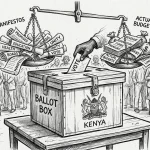
That distinction may become one of the defining economic stories of the 2027 campaign, where manifestos will tell Kenyans what politicians want to do and the budget will tell them what the state can afford to do.