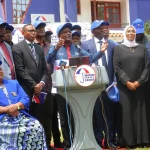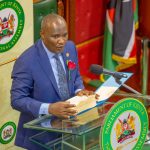




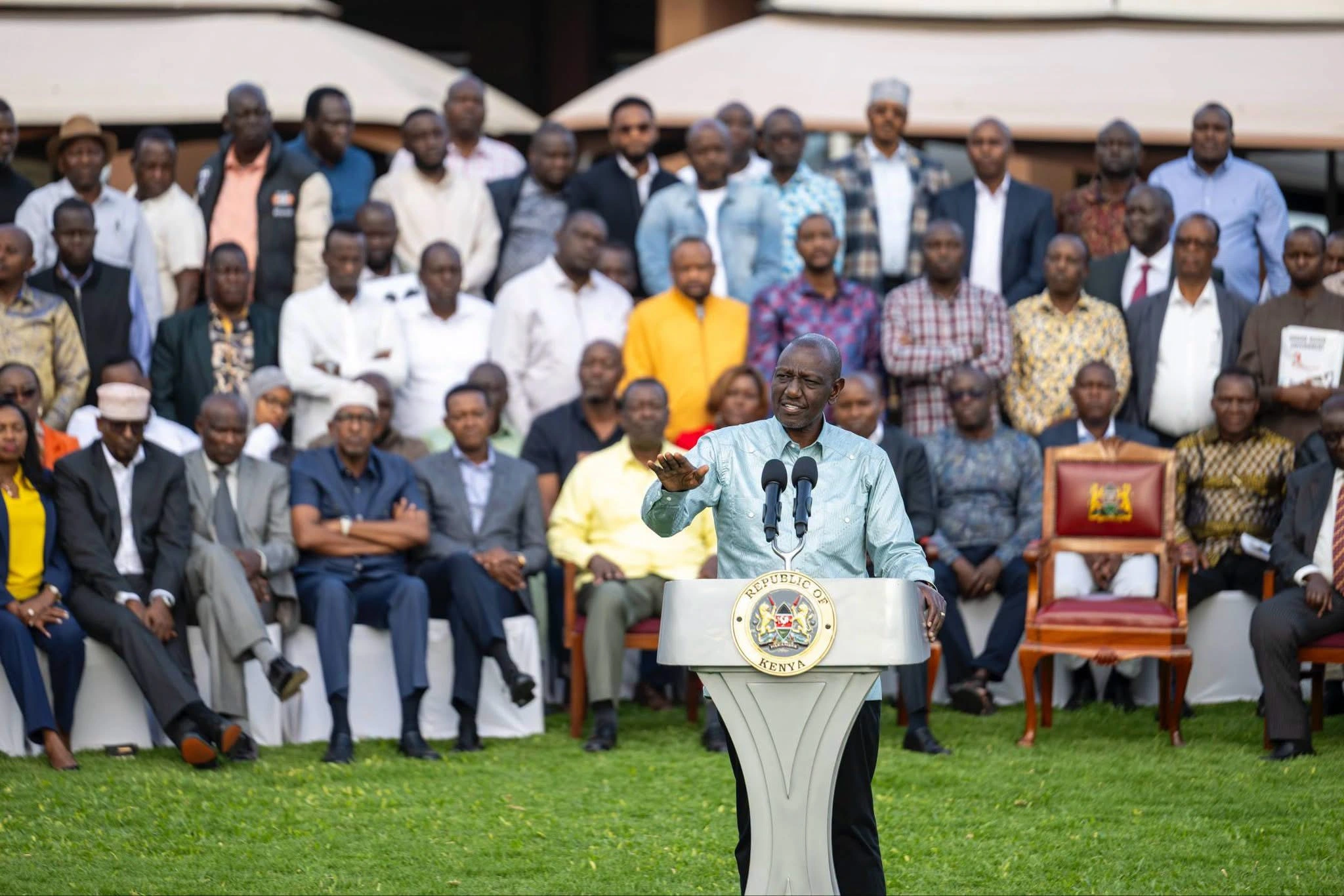
President William Ruto has effectively drawn the starting line for the 2027 election. Speaking to the Broad-Based Government parliamentary group in Naivasha on August 10, exactly a year before Kenyans return to the polls, Ruto did something more consequential than announce the next phase of his administration.
He presented the first coherent argument for his re-election: Kenya has recovered, his government has delivered, and the political coalition that now surrounds him should be trusted to take the country into its next phase.
The political significance was impossible to miss. Ruto announced that the United Democratic Alliance and the Orange Democratic Movement had formally resolved to contest the 2027 election together, with ODM agreeing not to field a presidential candidate and instead supporting his re-election for a second and final term.
The partnership that began as an arrangement for governing is therefore being converted into an electoral machine.
That changes the question confronting the opposition. It is no longer enough to argue that Ruto’s administration has been unpopular, controversial or economically painful for many Kenyans.
The opposition must now answer a more difficult question: what is its alternative to the government’s account of the past four years, and can it build a coalition broad enough to defeat the one now taking shape around State House
Ruto clearly understands that elections are ultimately arguments about the future, not balance sheets of the past. His speech, therefore, tried to establish both.
Broad-based Scorecard
The first half was essentially a performance review. The President described the economic situation inherited by his administration as one of severe strain, citing high inflation, pressure on the shilling, weakened investor confidence, food insecurity and debt constraints. Against that baseline, he presented a series of indicators intended to demonstrate recovery.
He put economic growth at approximately five per cent, said inflation had fallen sharply, foreign exchange reserves had risen above US$15 billion and the shilling had stabilised. He also claimed Kenya had become Africa’s sixth-largest economy and attracted record foreign investment.
Then came the sector-by-sector case for the Bottom-Up Economic Transformation Agenda.
The administration, he argued, has cut the price of a bag of fertiliser from Sh7,000 to Sh2,500 while maize production has risen from 44 million to nearly 75 million bags.
More than 28 million Kenyans have accessed the Hustler Fund, with more than Sh90 billion disbursed and Sh7 billion mobilised in savings. More than 450 modern markets are under construction, while 123,000 young entrepreneurs have received capital and mentorship through NYOTA.
In health, Ruto pointed to more than 32 million people registered with the Social Health Authority, more than 16,000 contracted health facilities and more than 100,000 Community Health Promoters.
In housing, the government says more than 270,000 affordable homes are under construction, and the programme has created more than 650,000 jobs. In education, his speech cited more than 100,000 teachers recruited, 23,000 classrooms constructed and a more than doubling of TVET enrolment.
And in the digital economy, the pitch is equally expansive: more than 23,000 government services on eCitizen, over 30,000 kilometres of fibre laid and hundreds of thousands of young people earning livelihoods through digital work.
Infrastructure completes the picture. Ruto cited more than 6,000 kilometres of roads under construction, continued work on the Naivasha-Kisumu-Malaba railway, modernisation of JKIA and the ports, 1.3 million additional electricity connections and investments in dams, water storage and irrigation.
Taken together, this is the administration’s emerging 2027 scoreboard. But a scoreboard is not the same thing as a verdict.
The President’s speech is, after all, a political document. Its numbers are claims made by an incumbent seeking another mandate, and the crucial question for voters will not simply be whether the programmes exist.
It will be whether they have produced improvements that people can actually feel in their households, businesses and communities, and distinction could define the election.
Ruto himself appears to recognise it. His argument is shifting from whether Kenya can recover to how far Kenya can go. He wants the 2027 election to become a contest over the next stage of national development rather than a referendum solely on the disruptions and costs of his first term.
This is why the President introduced the idea of Kenya becoming a “First World nation” and tied it to a proposed National Conversation on Kenya Beyond Vision 2030. He wants the political conversation to move beyond individual government programmes towards a longer-term national destination.
There is a clever political calculation here. If the election becomes primarily about the cost of living, taxes, healthcare frustrations, unemployment and public dissatisfaction, the incumbent is forced to defend his record.
If it becomes a contest about the next 20 or 30 years of Kenya’s development, however, Ruto can position himself as the experienced incumbent with an existing programme, infrastructure pipeline and political coalition.
Coalition Building
The proposed National Development Charter fits neatly into this strategy. Ruto says it should emerge from a national conversation involving citizens, businesses, professionals, universities, civil society, political parties and other groups, and should define a shared national destination beyond governments and election cycles.
It is an ambitious proposition, but it also creates a second political opportunity: to turn the 2027 campaign from a referendum on Ruto into a choice between competing visions of Kenya.
That is precisely where the newly formalised UDA-ODM coalition becomes important.
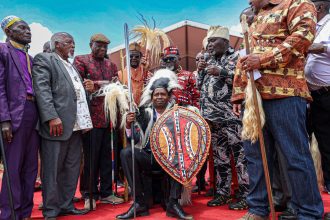
The President presented the partnership as evidence that cooperation produces better outcomes than confrontation. But electorally, it is more than that. It potentially combines the machinery, networks and political constituencies of two parties that have historically occupied very different sides of Kenya’s political divide.
The agreement also gives the alliance a structure. Ten members – five from each party – will develop a common manifesto, while another ten will work on the coalition framework, governance structures and leadership arrangements.
The manifesto process is particularly important because it offers Ruto an opportunity to make the coalition look less like an arrangement of political elites and more like a programme for governing.
Coalitions in Kenyan politics have often been built around personalities, arithmetic and the distribution of power. Ruto’s challenge is to demonstrate that this one is different: that ODM’s decision to support his re-election represents not merely an agreement between political leaders but a coherent governing project.
The opposition, meanwhile, faces the mirror image of the same problem. The emergence of a formal UDA-ODM alliance does not automatically translate into votes. Political coalitions can be broad on paper and fragmented on the ground.
Supporters of individual parties do not always transfer seamlessly to a coalition candidate, and the political logic of leaders can differ from the preferences of voters. But the coalition does change the arithmetic.
It potentially denies the opposition an important political constituency, gives Ruto greater access to networks beyond his traditional base and forces his challengers to think about coalition-building much earlier than they might otherwise have preferred.
The President’s biggest bet, however, is that the coalition can be held together by a story of delivery. That story will be tested relentlessly over the next year.
A family will not experience a macroeconomic recovery as a percentage-point figure. It will experience it through food prices, school fees, rent, transport costs and the availability of work.
A patient will judge health reform by whether treatment is accessible when illness strikes. A farmer will judge agricultural reform through input costs, yields, markets and income. A young person will judge the digital economy by whether it can produce a reliable livelihood.
The gap between government statistics and lived experience is therefore likely to become one of the central battlegrounds of 2027.
Ruto has now made his opening argument: the difficult work of recovery has been done, the reforms are beginning to produce results, and the country should not change direction just as the foundations for transformation are being laid.
His opponents will have to make the counterargument with equal clarity: that the recovery is either overstated, unevenly distributed or insufficient to compensate for the costs imposed on Kenyans during the journey, and, crucially, that they have a better plan.
That is what makes August 10 significant. The President did not merely ask Kenyans to remember what his government has done. He asked them to accept a new definition of the election itself.
From now on, Ruto wants 2027 to be a contest between recovery and the next leap forward, between a government that says it has already demonstrated its capacity to deliver and opponents who must demonstrate that they can do better.
The UDA-ODM coalition gives him the political vehicle. The record he presented in Naivasha gives him the campaign narrative, and the next twelve months will determine whether Kenyans believe either one.