


Download Your Copy: The Chronicle Weekly July 27, 2026
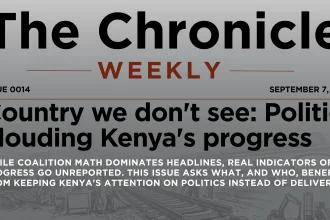
This week’s issue is, in one way or another, about the distance between the story a country tells about itself and the numbers underneath it.
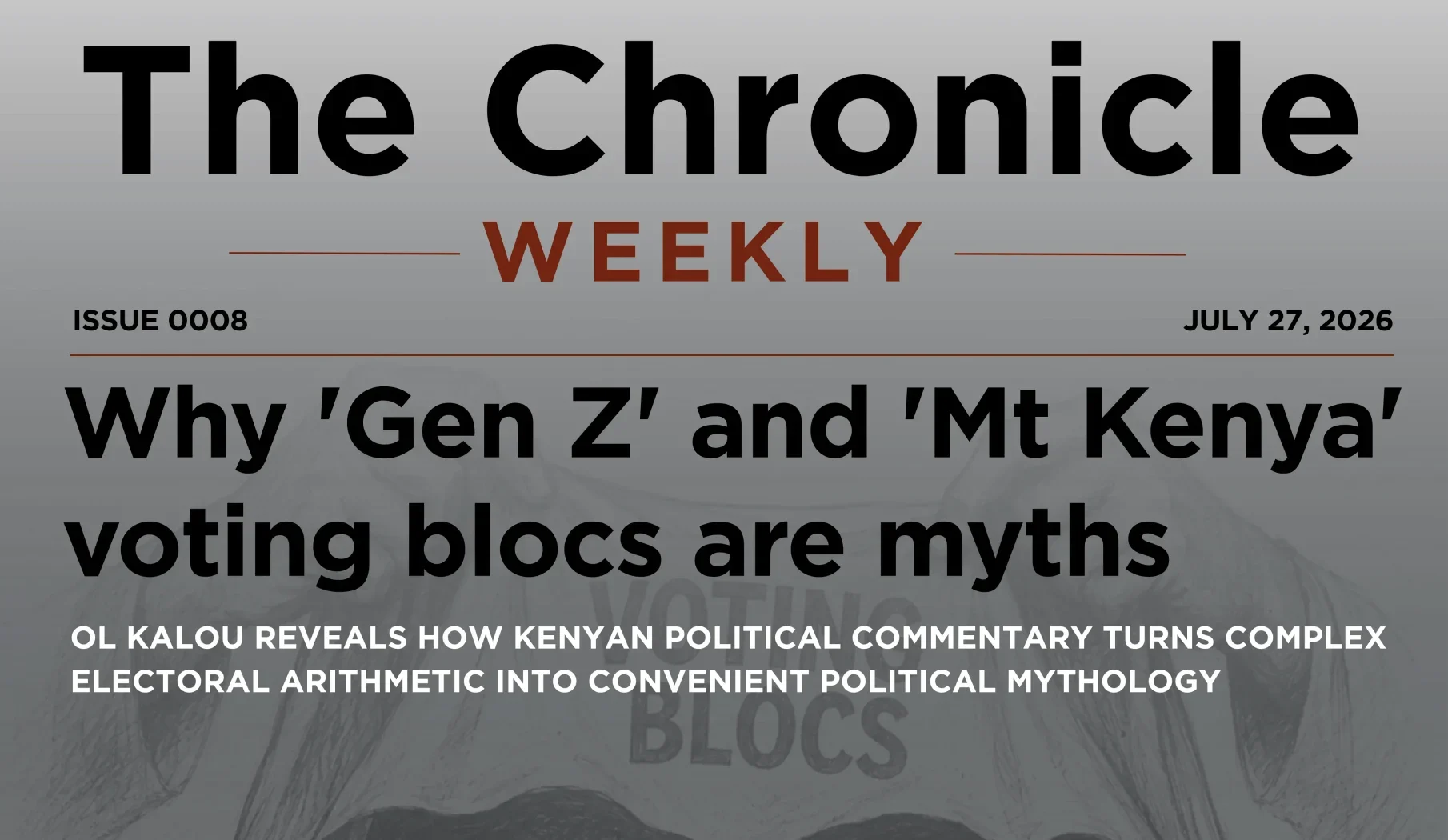
Ol Kalou’s seven-to-one result has already hardened into a verdict, repeated across newsrooms, television panels and social media timelines within hours of the count: Ruto has lost the Mountain, and with it, 2027. Our cover story returns to the voter register to test that claim, and finds a Kenya far more fractured and far less predictable than the shorthand of “blocs” allows.
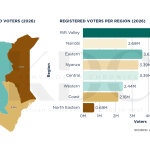
Central Kenya, on the broadest possible definition, holds barely a quarter of the national register, formidable yes, but nowhere near sufficient on its own. The Constitution’s dual threshold makes a one-region strategy structurally impossible, regardless of the margin any single by-election produces.
The same scrutiny is applied to the idea of a unified Gen Z vote, which recent opinion polling does not support once the cohort is broken down by age band; an 18-to-26-year-old and a 35-year-old classified together as “youth” are, the data suggests, voting from entirely different realities.
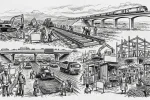
Raila Odinga’s infrastructure legacy gets the same treatment this week. Now that he can no longer contest, clarify, or correct the record himself, the claims made in his name have multiplied. And therefore the need to separate the projects he actually built from those attributed to him by supporters, successors and rivals alike.
We have tried to hold both truths at once: that his imprint on Kenya’s development era was real and considerable, and that not every highway, port or railway belongs to him.
The honest record, as our piece argues, lies somewhere between hero worship and revisionism, and readers deserve that middle ground rather than either extreme.
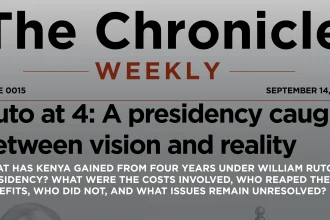
The government has its own mythology to answer for. The new thirty-year “First World” Vision arrives with three pillars, eight enabling foundations, and considerable ambition, but, as our analysis and this week’s explainer set out, with fewer answers on financing and political durability than a document of this scale requires.
It is strongest when diagnosing Kenya’s “development paradox,” the tendency to get policy right and then abandon it before it matures, and weakest when it comes to the arithmetic of who pays and what gets prioritised when money runs short.
Meanwhile, the Treasury’s own year-end reconciliation reveals a tax shortfall that is quietly offset with additional domestic borrowing, a reminder that the thirty-year vision is financed one fiscal year and one shortfall at a time.
Elsewhere in this issue, we examine the economy that elections themselves generate long before a single vote is cast, as well as the consultants, pollsters, and campaign machinery that constitute a genuine industry in their own right.
We also examine what the rise of Kenya’s “soft life” says about a generation quietly redefining ambition, success and rest on its own terms, against an economic backdrop that makes the old bargain of guaranteed security look increasingly unreliable
.
Read together, these stories share a single instruction: check the register, check the reconciliation, check the record. The rest is narrative