


For several months, the political conversation around Mt Kenya has centred on one question: who speaks for the region? Different actors have asked it in different ways.
Rigathi Gachagua has sought to retain the political influence he built as William Ruto’s deputy and has repositioned himself as one of the President’s most vocal opponents.
Leaders in Mt Kenya East have pushed for greater recognition of their bloc even as some politicians seek to prevent the mountain from fragmenting politically.
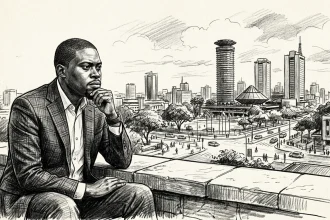
Now Kithure Kindiki is attempting to offer a different answer. The Deputy President’s recent tour of Mt Kenya is not simply a sequence of development inspections and public meetings.
It is increasingly looking like an effort to rebuild a political network around elders, church leaders, businesspeople, grassroots officials and community structures, while tying that network to the record and resources of the national government.
Kindiki has been presenting himself as a bridge between Mt Kenya and the national government. He has also intensified his activity across Meru, Tharaka Nithi and Embu, combining development tours with political mobilisation.
Then came Kirigiti.
Building Through The Elders
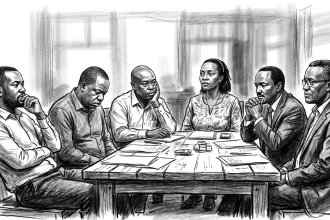
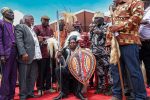
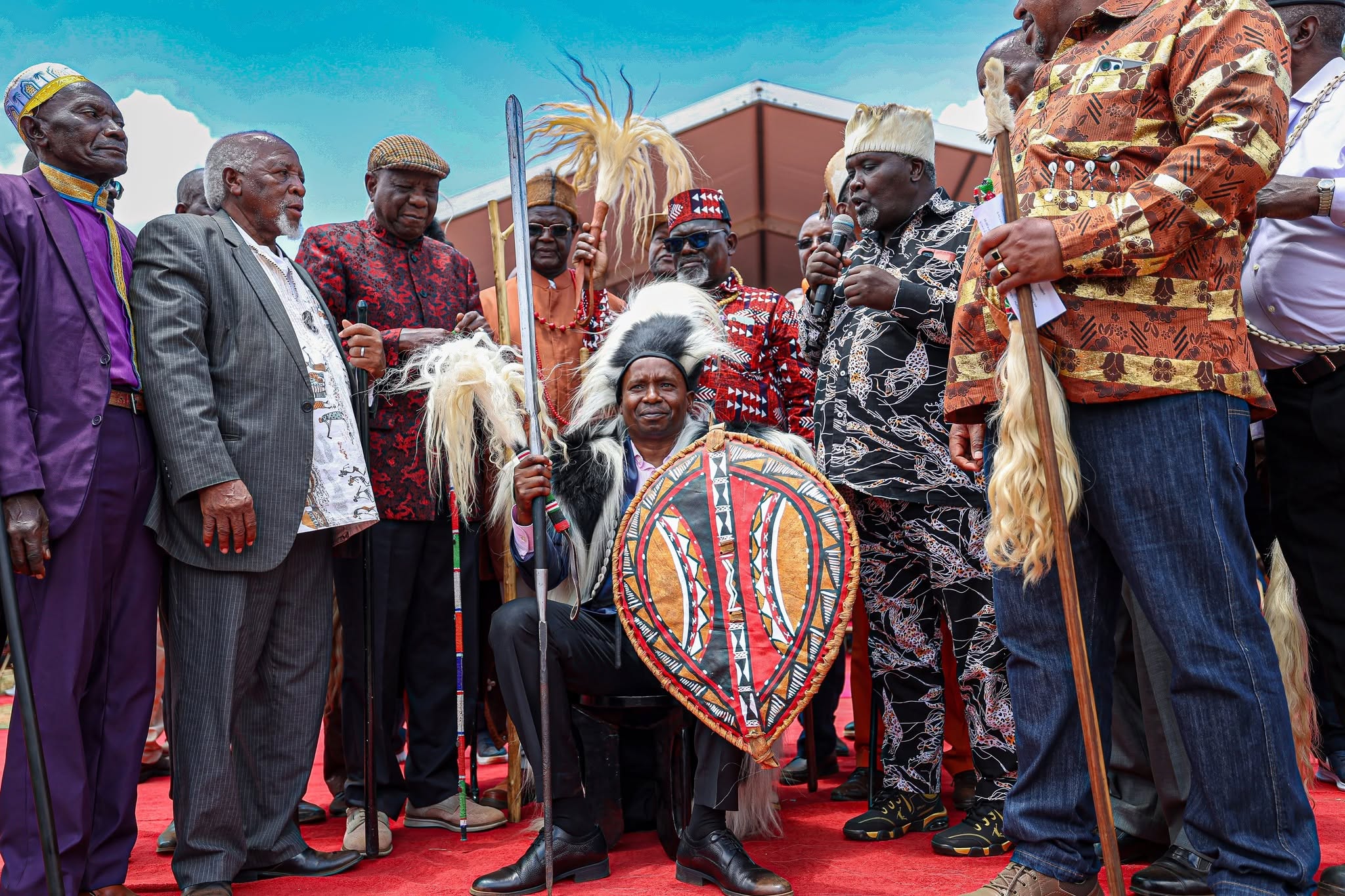
On September 19, more than 10,000 elders gathered at Kirigiti Stadium in Kiambu, with representatives of Gikuyu, Embu, Mbeere and Meru cultural institutions endorsing Kindiki as a spokesperson and representative of the wider Mt Kenya region.
For months, the political conversation had drifted toward an East-West distinction, with parts of Mt Kenya East arguing for a more distinct political identity. Public Service Cabinet Secretary Geoffrey Ruku had even used an axe as a symbol of the proposed political separation.
At Kirigiti, the symbolism was reversed, and the axe was returned to the elders and replaced with a flywhisk, presented as a symbol of reconciliation and unity. Kindiki was given the task of taking that message across the region.
The move also fitted neatly into the political problem facing UDA; a party that does not merely need crowds but relationships.
Kindiki’s strategy is an attempt to rebuild the bridge between government and Mt Kenya after the political rupture between Ruto and Gachagua.
That is potentially more consequential than another political rally.
A rally demonstrates mobilisation on a particular day. A network can provide access, information, local legitimacy and political communication long after the crowd has dispersed.
But Kirigiti also showed the project’s limits. Critics have questioned whether a gathering of elders could legitimately speak for the entire region, particularly when elected leaders from parts of Mt Kenya West were not centrally involved.
These objections expose the central difficulty Kindiki faces: being endorsed by one set of regional institutions does not automatically make him the accepted political voice of everyone those institutions claim to represent.
Then Came Embu
On September 12, a UDA meeting at Nembure Grounds in Embu, attended by Kindiki and Governor Cecily Mbarire, descended into violence after crowds outside the venue clashed with police.
Two men died. Six vehicles were burnt, and several other people were injured. Subsequent autopsies established that both men had died from gunshot wounds. The incident attracted political interpretation immediately.
UDA called for investigations, alleging that another political leader had organised and supervised the disruption. The party asked the IEBC, the ORPP and the DCI to investigate.
The opposition and Gachagua’s camp offered a different account, defending Manyatta MP Gitonga Mukunji and accusing the government of attempting to pin the violence on a political opponent.
Gachagua alleged that police were seeking Mukunji and claimed that Kindiki and Mbarire were attempting to associate him with the unrest. Mukunji denied involvement.
Another layer underlies the Kindiki project. Mt Kenya politics is no longer only about whether the region supports Ruto in 2027.
It is also increasingly about what comes after Ruto, who controls the region’s political machinery and whether today’s alliances are merely electoral arrangements or the beginning of a longer succession project.
Elders in Mt Kenya East have backed him for the 2027 running-mate position and linked his political project to a longer-term 2032 ambition. At the same time, his supporters are presenting him as the senior political figure through whom the region can engage the national government.
Kindiki himself has largely framed the current project around unity, development and reconciliation.
That framing is politically useful because it avoids making the immediate contest solely about personalities.
Yet the contest keeps producing personalities. Gachagua remains a powerful political presence in the region and has interpreted Kindiki’s activities as part of Ruto’s effort to divide and weaken Mt Kenya’s political bargaining power.
Kindiki, meanwhile, has rejected attempts to split the region along East-West lines and embraced the elders’ mandate to pursue a united political voice.
The result is an unusual political contest in which everyone talks about unity while competing to define what that unity means and who gets to lead it.
What The Kindiki Build Tells Us
The most important point may therefore be less about whether Kindiki has already rebuilt Mt Kenya for UDA than about what he has recognised about the terrain.
The mountain cannot simply be approached as a single electoral bloc.
It contains different generations of political leadership, distinct regional interests, competing economic grievances and increasingly divergent views about the relationship with the Ruto administration.
The East-West debate has made those differences visible, while the Gachagua-Ruto rupture has given them a national political dimension.
Kindiki’s response has been to build horizontally: elders, grassroots officials, development projects, business networks and community leaders. That is a different political proposition from simply holding rallies.
But the events of the past few weeks also show why the proposition is difficult. The same region in which elders can gather thousands of people around a message of unity can, days earlier, produce a political meeting that ends with two deaths.
The same political space in which government allies can talk about development and reconciliation can also generate accusations of political targeting and mobilisation of violence.
This is why the battle for Mt Kenya ahead of 2027 is unlikely to be settled by one endorsement, one rally or one political figure.
Kindiki may be building a new bridge between UDA and the region. The question is whether enough of Mt Kenya wants to cross it and, perhaps more importantly, who else is building on the other side.