



Nairobi’s urban problems are easy to identify. In the Central Business District, parking competes with movement; street lighting needs ongoing maintenance; and infrastructure for managing deaths, forensic investigations and disaster-related casualties must keep pace with a growing city.
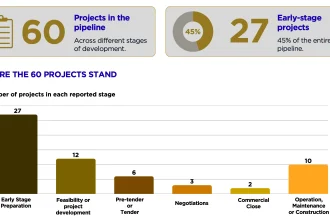
The harder question is how City Hall turns these needs into dependable public services without creating arrangements whose costs, obligations and benefits are difficult to assess. Three projects in Kenya’s latest public-private partnership (PPP) pipeline offer a window into that challenge.
The proposed Nairobi Dignity Centre: Funeral and Forensic Services, a multi-storey mobility hub at Sunken Park and a smart street lighting programme could address distinct urban needs. But they are all at different stages of development.
The Dignity Centre and mobility hub are among seven projects newly approved to proceed through the PPP process during the first quarter of the 2026/27 financial year.
Both received approval of their project concept notes on September 8, 2026. The smart street lighting project is further along, having completed its feasibility study in October 2024, although the report says the contracting authority was still expected to submit the study for approval.
The proposals ask whether private participation can improve Nairobi’s urban services while ensuring transparency, affordability and public accountability.
Infrastructure For A Service That Cannot Wait
The proposed Nairobi Dignity Centre is perhaps the most consequential because it concerns a public service whose importance becomes most visible during moments of grief, uncertainty and crisis.
According to the Treasury report, the project seeks to modernise the existing City Mortuary by developing the Nairobi City Funeral Home and Forensic Services.
Its objectives are to improve facility effectiveness, efficiency, and economy; expand storage for 1,000 bodies plus disaster capacity; establish a forensic lab for 2,500 annual postmortems; and modernise waste management. Its estimated value is undetermined, and the city proposes competitive bidding.
The intended scope extends beyond physical space: mortuary and forensic services are public infrastructure that enable dignified handling of the dead, identification, investigations, and mass- casualty management.
Their effectiveness affects families, law enforcement, health services, and the justice system.
The proposed capacity shows the facility’s scale, but capacity alone won’t ensure success. The county must explain how it will improve and maintain services and staff, meet operating standards, and function during peak demand.
Before the project advances, key financial details remain unanswered. The status report provides no project value, financing structure, or implementation schedule, making it too early to assess the facility’s lifetime cost to the county or how service costs will be covered.
A modern facility could strengthen public services, but investment should be justified by measurable outcomes: reliable operations, suitable forensic capacity, dignified treatment, effective waste management, and safeguards for families.
Can More Parking Improve Movement?
The proposed multi-storey mobility hub takes on a different challenge: how Nairobi manages limited space in a busy city centre.
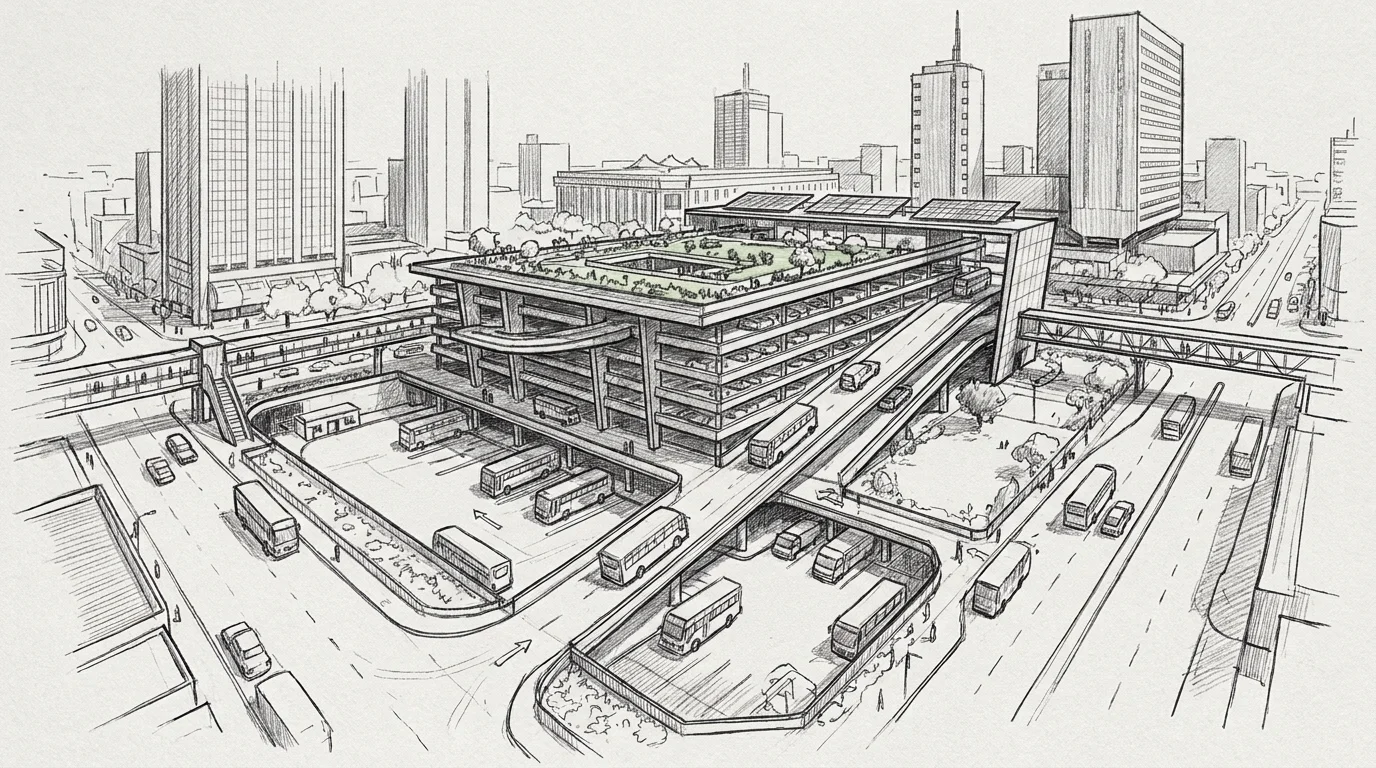
The project would redevelop Sunken Park, at the junction of Taifa Road and Harambee Avenue, into a multi-use, multi-storey mobility hub under a PPP arrangement. The Treasury report describes the proposal as a response to the CBD’s shortage of structured parking, aiming to ease traffic congestion and unlock the value of underutilised urban land.
The proposed facility would provide 3,800 structured parking spaces and could serve up to 5,700 vehicles daily, replacing the existing 240-slot surface parking lot.
The estimated project value is listed as undetermined, and the concept note was approved on September 8, 2026, allowing it to proceed to a feasibility study.
The proposed increase in parking capacity is substantial. But the central policy question is whether adding parking will improve how people move through the CBD, rather than simply increasing the number of vehicles that can enter it.
Assess a mobility hub within the wider transport system. Its design, access, circulation, pedestrian links and public transport connections determine whether it eases traffic or creates bottlenecks. Consider effects on nearby streets and businesses.
Translate the project’s ambition for cleaner, safer transport into measurable outcomes: assess links to walking routes and public transport, peak traffic management, and improved access to nearby public spaces.
Affordability is another consideration. The report does not specify parking tariffs, the proposed commercial model or the eventual allocation of revenues and costs. These are important matters for a project intended to operate in a central business district where the cost of accessing work, services and commercial premises already shapes how people use the city.
Feasibility work should therefore establish not only whether the proposed hub is commercially viable, but whether its design and operation are likely to improve urban mobility. More parking may help, but the number of spaces alone does not measure reduced congestion.
The Long-Term Cost Of Keeping The City Lit
Nairobi’s smart street lighting proposal is a more mature project in the pipeline, but it also shows why maintaining infrastructure can be as important as installing it.
The project is estimated at Sh10 billion and proposes developing, modernising, expanding, operating, and maintaining about 100,000 street lighting assets to agreed standards over 10 years.
The planned system includes new lighting fixtures and LED lamps, retrofitting existing fixtures with LED technology, and establishing a common management system supported by ultra-narrowband technology.
The feasibility study was completed in October 2024, but the Treasury report stated that the contracting authority was expected to submit it for approval by September 30, 2026. The project was listed under feasibility and development, with competitive bidding as the procurement method.
The proposed scale goes beyond replacing streetlights; it creates a long-term system for managing urban assets. Its success will depend on improving lighting reliability, speeding fault repairs, and transparently monitoring performance.
A connected management system could help the county track equipment and maintenance needs, but the technology itself is not the outcome. Residents experience whether streets are adequately lit, whether faults are addressed promptly and whether lighting remains functional.
Those are the results against which the programme should be judged. The proposed 10-year period also makes the operating arrangement particularly important.
The county needs to understand what the Sh10 billion estimate covers, how payments would be structured, how maintenance standards would be enforced and what happens if agreed service levels are not met.
The report does not provide the final payment structure or contract terms, so the county should scrutinise these details further.
The county should also establish a baseline before implementation. Without a reliable record of the existing network’s condition and performance, it will be difficult to determine whether the project has delivered improvements.
Public reporting should allow assessment of the proportion of lights functioning, the time taken to repair faults, and performance against contractual standards.
The strongest case for a smart lighting partnership will not rest on the sophistication of its technology, but on the quality and consistency of the service it provides.
The Accountability Test Begins Before Construction
The three projects illustrate different ways in which Nairobi could use PPP arrangements to address urban needs.
The Dignity Centre would upgrade funeral and forensic services; the mobility hub would reorganise CBD parking and transport; and the street lighting programme would modernise and maintain public assets. Their common feature is that the public benefits remain prospective.
The Dignity Centre and mobility hub received concept-note approval only by early September 2026. The smart lighting project completed a feasibility study but still needed approval. None had a signed agreement, reached financial close, or begun construction or operation.
That distinction matters because PPPs are not simply a means of obtaining infrastructure. They create contractual relationships that can shape how services are financed, maintained and delivered over many years.
The county needs to understand not only what will be built, but what it will be required to pay, what risks it retains, and what remedies it will have if performance falls short.
Before these projects advance, Nairobi should publish clear explanations of their feasibility findings, estimated lifecycle costs, proposed financing structures and expected public benefits.
Procurement contracts should set measurable performance standards, transparent payments, and meaningful consequences for persistent underperformance.
The county should also explain how each project compares with feasible alternatives.
For the mobility hub, that includes examining the relationship between parking provision and wider transport management.
For street lighting, it means showing how the proposed arrangement will improve on existing maintenance and operating practices.
For the Dignity Centre, it means demonstrating how the facility will strengthen service quality and operational resilience.
These questions are not reasons to abandon private participation. They test whether it offers value for money and a credible way to improve public services.
Nairobi’s infrastructure needs are real, and the projects in the PPP pipeline point to areas where investment could make a difference.
But a concept note is only a beginning, a feasibility study is not a finished facility, and a contract is not proof of a service delivered.
City Hall’s real achievement will not be the number of projects it advances through the PPP process. It will be whether Nairobians receive better services, whether those services remain reliable, and whether the public can see clearly what it is paying for.