





There was a time when the good life in Kenya was easy to describe: a steady salary, a plot of land, a house rising slowly on the outskirts of town and, if fortune smiled, a Toyota parked in the driveway.
Success had visible markers then, things you could point to, count and show off with confidence.
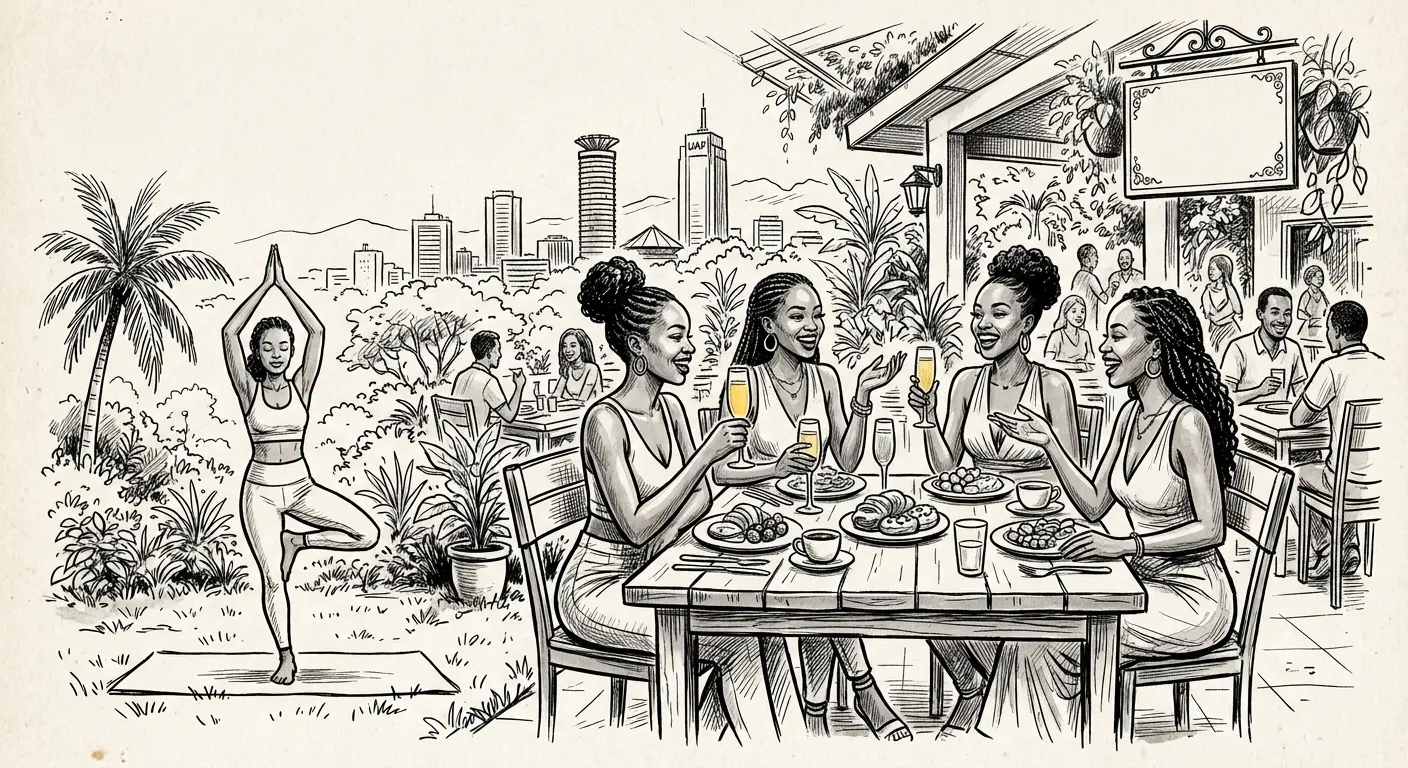
The new Kenyan dream is less concrete and far more fluid. It may look like a weekend in Diani, a reservation in Westlands, a Pilates class on a Tuesday morning, a flight to Dubai or an afternoon spent in a beautifully lit coffee shop.
It may also mean working from home, turning down a meeting, taking leave without guilt or simply enjoying a day that does not revolve around productivity.
This, in Kenyan terms, is the soft life: a lifestyle built around comfort, leisure, wellness, experiences and the deliberate refusal of unnecessary struggle. At first glance, it can seem frivolous, yet it reveals something deeper about a country whose ideas about work, money and aspiration are changing.
From Survival to Self-Care
The rise of the soft life partly reflects a growing fatigue with the culture of exhaustion that has shaped urban Kenya for years.
For many professionals, especially in Nairobi, adulthood has long been framed as a bargain in which suffering today guarantees security tomorrow: work hard, save, build, sacrifice and repeat.
Young Kenyans are entering adulthood in an economy where jobs are harder to find, housing is more expensive, and the traditional signs of stability seem increasingly out of reach.
They have watched older generations labour without always receiving the security they were told to expect. The result has been a quiet shift in priorities; if the future feels unstable, then living should not be postponed indefinitely.
This is where the soft life becomes more than a social media trend and turns into a cultural response to the idea that a meaningful life must always be earned through suffering.
The weekend trip becomes a testament to the importance of rest, the expensive coffee becomes a small reward, the wellness class becomes an investment in one’s health, and the dinner out becomes an attempt to build a life that extends beyond work.
The Instagram Effect
Instagram and TikTok have transformed lifestyle aspiration by making other people’s leisure visible in ways previous generations never experienced. A decade ago, one might have known that wealthy people lived differently; today, one can watch the difference unfold in real time.
The hotel room, the airport lounge, the gym, the outfit, the cocktail and the restaurant table all appear as part of a carefully curated digital identity built around travel, beauty, fitness, food and luxury.
Lifestyle itself has become content, but the problem is that social media collapses the distance between seeing and having. A person scrolling through TikTok may see a Zanzibar weekend presented as casually as a supermarket run, or a designer handbag described as a basic necessity.
What rarely appears in the frame is the economic context: debt, rent, school fees, family obligations or the anxiety of unstable income. That absence can turn aspiration into pressure.
The person who cannot afford the lifestyle may begin to feel behind, even when they are not. Social media promises freedom while quietly creating new expectations, and the soft life can become another form of labour, one that requires dressing, photographing, posting and maintaining.
The Business of Feeling Good
The soft life has also created an economy of its own. Wellness centres, gyms, spas, beauty businesses, boutique hotels, coffee shops, restaurants, travel companies and lifestyle brands have all benefited from consumers who are increasingly willing to spend on experiences.
Kenya’s middle and upper-middle classes are not only buying products; they are buying feelings.
A restaurant sells atmosphere as much as food, a gym sells confidence, a holiday sells escape, a spa sells restoration, and a boutique hotel sells the temporary possibility of becoming someone else.
That is why lifestyle businesses have become so attentive to experience. Lighting, music, architecture and even the Instagram corner now matter almost as much as the product itself. In the experience economy, memory often matters more than the item purchased.
For businesses that understand this shift, the opportunity is significant. Many young Kenyan consumers may not have the money for expensive assets, but they are willing to spend smaller amounts on moments that make life feel better.
The challenge lies in understanding the difference between luxury and value, because the most successful brands may not be the most expensive ones, but the ones that make ordinary consumers feel well-lived without making them feel reckless.
Soft Life, Hard Economy
There is, however, an uncomfortable tension at the centre of the movement. Kenya remains a country where many households struggle to meet basic needs, while young people face an uncertain job market and a high cost of living.
Against that backdrop, the celebration of luxury can sometimes feel detached from reality.
Still, dismissing the soft life as shallow would be too easy. People have always sought pleasure, beauty and escape, even in difficult times; what has changed is the visibility of that consumption and the language used to describe it.
The soft life is not necessarily about being rich. For some Kenyans, it simply means taking a walk instead of working late, leaving a toxic job, spending Sunday with family, travelling once a year or refusing to measure personal worth by income.
That more democratic version, rooted less in champagne and more in boundaries, may prove the more lasting one.
Perhaps the most interesting thing about the soft life is that it is changing what Kenyans value. For years, wealth was displayed through things; now, increasingly, it is displayed through time.
The person who can take a long lunch on a Wednesday is perceived differently from the person who cannot leave the office.
The person who can work remotely from the coast appears to have achieved something that a large salary alone cannot guarantee. Time has become a status symbol.
That helps explain why remote work, flexible schedules and location independence have become such strong aspirations among young professionals.
The ultimate luxury is no longer simply owning more; it is needing less, whether that means less commuting, less stress, less dependence on a single employer or less obligation to live a life that does not make sense.
At its best, the soft life is not a rejection of ambition, but a rejection of the belief that ambition must always look like exhaustion.
The Life After the Hustle
Kenya’s soft-life movement will keep growing even as the economy remains difficult.
The contradictions will remain too: people will complain about the cost of living while posting brunch photos, discuss financial pressure while saving for holidays and talk about minimalism while buying the latest phone.
Yet that contradiction is not uniquely Kenyan and reflects a generation trying to reconcile economic uncertainty with the desire to enjoy life. The real question is whether the soft life remains an aesthetic or becomes a deeper cultural shift.
If it stays an aesthetic, it will simply become another marketing category, another way to sell holidays, skincare, apartments and expensive coffee. If it becomes a philosophy, it could reshape how Kenyans define success.
Perhaps success will no longer mean only how much one earns, owns or accumulates, but how much control one has over time, relationships and peace.
In a country that has spent decades glorifying the hustle, that would be a profound change. The soft life may have started on Instagram, but the idea behind it is older and more human.
After years of being told to work harder, Kenyans are beginning to ask a different question: what if the point of all this work is to eventually have a life worth living?