



Kenya’s agricultural debate has long centred on familiar commodities: maize and food security, tea and coffee exports, and sugarcane, which returns to the headlines when millers struggle, farmers go unpaid, or imports threaten local production.
However, the October 8 Presidential Agriculture Town Hall at Jamhuri Park previewed a shift toward an agricultural economy spanning overlooked regions, production systems and industrial markets, not just familiar crops.
From Tana River sugarcane and Western Kenya Robusta coffee to Cayenne chillies for extraction, these developments show Kenya shifting its strategy beyond food production toward commercially viable industries built around its agricultural products.
The question, then, is whether these emerging opportunities can move from policy announcements and investment commitments to reliable markets, productive farms and improved incomes.
To bridge the gap between intention and impact, clear frameworks for public–private coordination will be needed to direct investment toward infrastructure and extension services.
Policy should enforce market contracts, monitor production, improve access to affordable inputs and finance, and ease market entry and export regulations.
Tana River: Emerging Sugar Belt
For decades, Kenya’s sugar industry has relied on smallholders in the western and Nyanza regions, who supply factories such as Mumias, Nzoia, Sony, and Chemelil. Production is limited by ageing factories, unreliable cane supply, fragmented land, and slow-maturing rain-fed varieties.
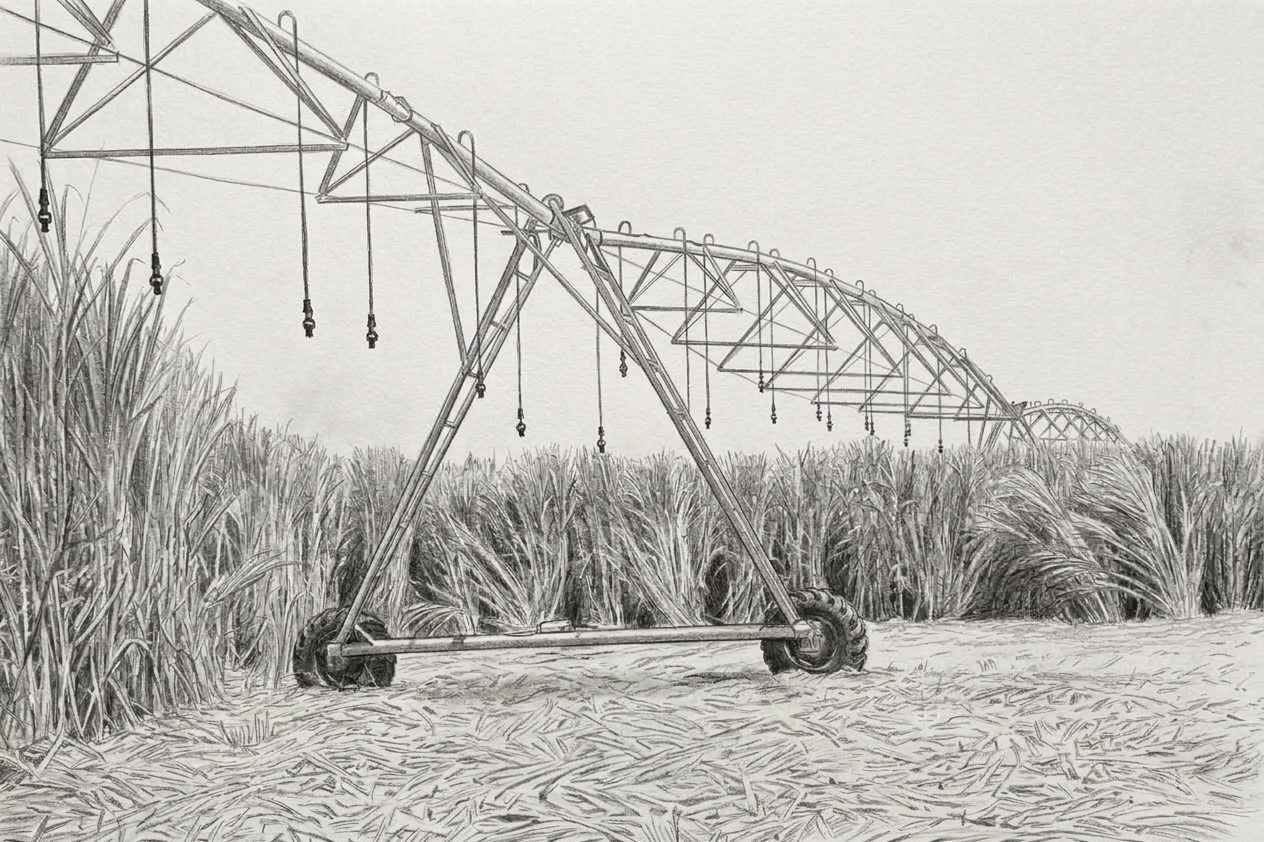
The town hall highlighted an alternative in Tana River, where irrigated sugarcane is being developed under a model that combines large-scale cultivation, mechanisation and industrial processing.
Forum figures were striking: trial production reportedly achieved cane maturity in nine months and yields of 50 tonnes per acre. If independently validated at commercial scale, these results would show how irrigation and agro-climatic conditions can boost productivity.
Two private investors reportedly have commitments covering 50,000 acres each, creating the prospect of 100,000 acres of new sugarcane production in Tana River. According to figures presented at the town hall, the national ambition is to expand production to achieve net-exporter status by 2029–2030.
Beyond sugar, Tana River could produce ethanol, generate electricity from bagasse, and support other processing, creating multiple revenue streams from one crop.
However, projections rely on assumptions: trial yields may not scale to 100,000 acres, and commercial success depends on water, irrigation costs, soil, seed-cane supply, factory capacity, and transport. Mitigate these risks by investing in water infrastructure and adopting efficient irrigation to reduce vulnerability to water scarcity.
Improved access to certified seed cane, phased infrastructure development, and flexible, scalable processing capacity can help manage supply and demand uncertainty. Targeted government support and private-sector logistics and technical services are essential to close implementation gaps.
Local communities matter: large-scale irrigated agriculture competes for land and water, while pastoralism and other livelihoods remain vital. The project’s performance assessment must therefore include benefit distribution, the protection of community interests, and sustainable water use.
Inclusive planning will require establishing consultation forums, local stakeholder committees, and regular feedback sessions where community members can raise concerns and help shape implementation.
Mechanisms such as participatory monitoring, community representatives on oversight bodies, and transparent reporting structures are essential to ensure that local voices are heard and emerging issues are addressed in real time.
Tana River, then, tests whether Kenya can build a new agricultural production frontier without repeating the structural weaknesses that have troubled its established sugar industry.
The Hidden Robusta Opportunity
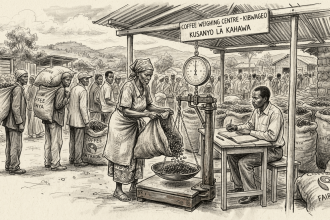
Kenya is known for highland-grown Arabica, but the town hall highlighted an opportunity to grow Robusta at lower altitudes, boost domestic processing, and reduce reliance on imported instant coffee.
This matters commercially: instant coffee is manufactured, not grown, and local production requires suitable beans and industrial extraction, drying, packaging, and distribution.
The town hall cited demand for instant coffee, reported distributing one million Robusta seedlings to farmers in Busia and nearby areas, and said some of a Sh1 billion national seedling allocation would support Robusta production.
The shift is visible in western Kenya. In June 2025, Busia County said it distributed over 400,000 Robusta seedlings to 2,500 registered farmers and stressed the need to build local production and processing capacity to revive the crop.
Robusta could expand Kenya’s coffee economy beyond premium Arabica, support farmers in suitable lower-altitude areas, and supply manufacturers serving the instant-coffee market.
This could transform Kenya’s coffee industry from one focused almost entirely on export-grade beans into a diversified sector serving international speciality markets, domestic consumers and industrial processors — advancing value-added production.
Seedling distribution is just the start: Robusta needs suitable varieties, agronomic support, adequate production, reliable buyers, and viable processing.
Key bottlenecks include aggregating smallholder supply, providing affordable farmer financing, delivering technical extension, and securing reliable processor procurement.
Address these constraints by supporting cooperative marketing, expanding smallholder coffee credit, scaling field extension, and enforcing processor–farmer group contracts.
Plants need reliable supplies; farmers need predictable demand and competitive prices. Kenya’s success depends on linking growers, processors, and consumers — not just planting more coffee.
Cayenne Chillies: Industrial-Export Proposition
A lesser-known opportunity discussed at the town hall was supplying Cayenne chillies to Chinese industry. Beyond fresh produce and spices, red chillies contain capsanthin, a pigment used in food colouring and other applications.
Industrial demand could create a market for farmers growing the required varieties, quality, and volumes. The town hall outlined Chinese manufacturers’ need for natural colour additives and efforts to establish regulations and phytosanitary arrangements for direct Kenyan exports.
The reported work with China’s General Administration of Customs matters because access to a foreign market depends on formal compliance requirements, not simply buyer interest.
The discussion highlighted climate adaptation in Kerio Valley crop-damage hotspots, where elephants eat maize and pawpaw. Chilli was presented as an alternative, since wildlife generally avoids it.
With suitable varieties and production systems, chilli could boost farmers’ income and reduce wildlife damage. But it cannot resolve human-wildlife conflict, which also involves land use, conservation and community safety.
The commercial challenge matters too: industrial buyers need consistent volumes, traceable production and agreed quality standards. Farmers need reliable contracts, inputs and transparent prices; exporters must meet food-safety and phytosanitary rules.
Before treating China as an established export market, key questions remain: Are protocols finalised and shipments underway? What prices are buyers offering, and how much value will reach growers?
Cayenne’s significance lies in linking a relatively unfamiliar crop to a defined industrial market, rather than encouraging farmers to grow a commodity first and search for buyers later. It is another example of the broader agricultural shift this article is tracing.
Production And Marine Aquaculture
Kenya’s fisheries sector offers another illustration of the same shift: moving from dependence on natural resources towards more structured production systems that can support the broader agricultural transformation.
The town hall reviewed progress on the Kabonyo Fisheries and Aquaculture Research Centre in Kisumu, plans for hatcheries beyond freshwater tilapia, and grants and deep-sea fishing boats for coastal communities. It also discussed rabbitfish, shrimp and other marine species.
The initiatives aim to expand aquaculture and help coastal communities access higher-value fisheries. Inland cages and hatcheries could secure fingerling supplies and inputs; marine aquaculture could diversify products if hatcheries, sites, feed, expertise and markets advance together.
Kabonyo could help address a key constraint: reliable fingerling supplies. But the centre must do more than open—it needs to provide quality fingerlings, assist farmers and enable commercially viable fish farming.
Cage farming requires controls on stocking, feed waste, disease, and impacts on water. Marine aquaculture brings technical and ecological challenges, while coastal communities need sustainable access to resources and viable markets.
The aim is to ease pressure on wild fisheries while creating fish, jobs and income.
Success depends on infrastructure and support that boost production, improve post-harvest handling and make fishing-community earnings more reliable.
Industrial Value Hidden in Livestock
Livestock policy often focuses on milk prices, beef production, animal disease and pastoral livelihoods. The town hall highlighted another opportunity: using hides and skins to build a domestic leather industry.
The discussion covered a directive to source military and police footwear from Kenyan leather, develop the Kenani Leather Industrial Park in Machakos, invest in effluent treatment, and attract finished-leather manufacturers.
Kenya’s livestock sector supplies hides and skins, but their value depends on proper preservation and processing into competitive products. Government purchasing could secure demand, spur investment and jobs, and boost demand for livestock products.
Higher export duties on raw hides are proposed to retain processing and value addition in Kenya.
Success depends on manufacturers meeting quality, cost and delivery standards. Hides must be collected and preserved properly, tanneries must have reliable supplies and meet environmental rules, and finished goods must compete beyond government contracts.
The leather industry illustrates a broader lesson for agriculture: livestock’s value extends beyond meat and milk.
Hides and skins can support a manufacturing chain that creates jobs and keeps more economic value local, but only if the links between farmers, traders, tanneries, and manufacturers work efficiently.
Common Thread: Value Addition, Not More Production
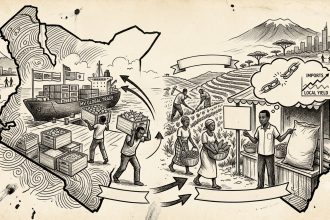
The five developments signal a shift in Kenya’s agricultural policy: identifying production opportunities, linking them to industrial demand, and building infrastructure to capture more domestic value.
Tana River sugar aims to expand production into a new region and link it to processing and energy. Robusta coffee aims to build a domestic supply base for a product Kenya consumes but also imports.
Cayenne chillies can connect farmers to specialised industrial-export markets. Aquaculture expands fish production through controlled systems, while leather turns livestock by-products into inputs for domestic manufacturing.
Despite their differences, these industries need viable production, reliable inputs, infrastructure, financing, skilled labour, clear rules, and buyers willing to pay sustainable prices.
They show why announcements alone can’t measure agricultural transformation: committed sugarcane acreage isn’t productive acreage, distributed seedlings aren’t mature coffee trees, and buyer negotiations aren’t completed export markets.
Construction progress doesn’t guarantee a functioning hatchery, and a local procurement directive doesn’t automatically make domestic manufacturing competitive.
Kenya needs to track these initiatives against measurable outcomes, including actual production, processing capacity, farmer participation, market access, employment and the share of value retained within local economies.
Clear project KPIs — such as yield, processed volume, export growth, and farmers benefiting — set benchmarks for success.
Periodic reviews, independent audits, and progress reports will show whether policies deliver results and where adjustments could improve impact.
Integrating stakeholder feedback and documenting lessons learned will further strengthen accountability and support ongoing improvement across the sector.