





When Brian Kiprop Kiplagat appeared before the Chief Magistrate’s Court at Milimani, it brought to a head an 18-month manhunt spanning two continents and two justice systems.
His journey to that courtroom, from a southeast London flat, through an alleged flight across Kenya, to a border post at Namanga and now a formal extradition hearing, is more than the resolution of a wanted person mystery.
It is a case study in how Kenya and the United Kingdom navigate the legal mechanics of pursuing a suspect across jurisdictions, and the gaps that remain in that process.
Marianne Kilonzi, 43, was found dead in her Woolwich apartment in January 2025 after colleagues raised the alarm when she failed to report to work at Citibank, where she served as a Vice President. A post-mortem determined she died of blunt-force trauma and head injuries.
Within days, Metropolitan Police Detective Chief Inspector Suzanne Soren sought to reassure the public even as she signalled what detectives already suspected: investigators believed the suspect was known to Marianne, and there was no wider risk to the public.
That framing, a domestic case, not a public-safety emergency, is standard police communication, and it served its purpose. But it also illustrates a tension that runs through the entire case: declarations of “no wider risk” can inadvertently lower the urgency around a suspect’s movements at precisely the moment those movements matter most.
Police disclosed early on that one line of inquiry was that the suspect had left the UK. Knowing who was never the hard part. Finding him was.
The 18-month gap
Kenyan media identified Kiplagat publicly within two weeks of the murder, naming him as a person being sought and reporting that he had left the UK.
Yet from late January 2025 to his arrest in June 2026, no public arrest, extradition request, or prominent Interpol notice surfaced in Kenyan reporting.
The over a year gap is the accountability question at the centre of this case. Was a formal request ever lodged with Kenyan authorities, and if so, when?
On June 24, the Office of the Director of Public Prosecutions stated that the UK’s extradition request was received and reviewed before the DPP directed that proceedings be instituted, a sequence suggesting the formal request arrived just recently.
What triggered it remains unexplained. Is it new forensic evidence from London, renewed diplomatic pressure around the case’s first anniversary in January 2026, or simply the institutional momentum that follows an active arrest?
There is also the matter flagged in the prosecution’s earlier court filing: investigators wanted to establish how Kiplagat obtained more than one travel document after the murder.
He was reportedly arrested at Namanga on June 10, carrying a temporary permit issued the same day. That detail, independent of his guilt or innocence in the murder, speaks to document-control vulnerabilities that deserve scrutiny.
From “assistance” to extradition
The legal framing shifted dramatically in the space of ten days.
At the June 15 hearing before Magistrate Daisy Mutai, the ODPP was explicit: this was not extradition, merely a request for assistance in locating a suspect. Kiplagat was detained under Kenya’s domestic criminal procedure while the diplomatic machinery caught up.
By June 24, that machinery had arrived. The ODPP confirmed receipt of a formal UK extradition request, announced that the DPP had reviewed the supporting evidentiary material and approved proceedings, and scheduled Kiplagat’s arraignment at Milimani for the following morning.
The “assistance” framing was overtaken by events within a fortnight, a reminder that public statements in active cross-border cases often reflect where the paperwork stands on a given day, not where the investigation is ultimately headed.
The speed of that transition also answers, at least in part, the question of why the Magistrate’s ruling on detention mattered less than it first appeared. Whether she granted the 21-day order or not, formal extradition proceedings were imminent. The domestic detention was a holding measure while the ODPP completed its review.
What the extradition process looks like
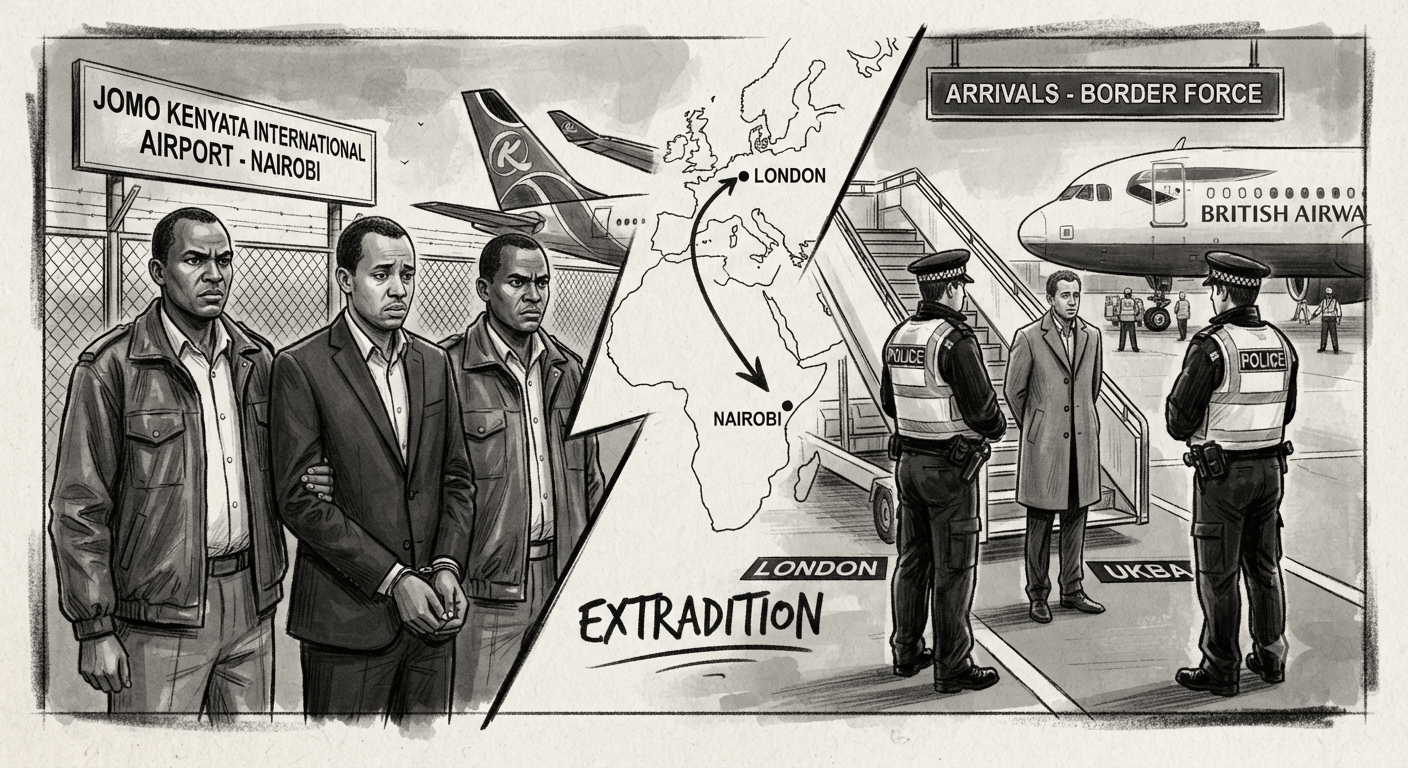
Kenya’s Extradition (Commonwealth Countries) Act governs the process with Britain. Under that framework, an offence qualifies for surrender if it is punishable in the requesting country and falls within the Act’s schedule; murder sits squarely there.
The Chief Magistrate’s Court at Milimani will now examine whether the statutory threshold is met: that the evidence presented would justify Kiplagat’s arrest had the offence occurred in Kenya.
That hearing is not a trial on the merits. The court is not determining guilt; it is determining whether a prima facie case exists sufficient to warrant surrender. Kiplagat’s legal team will have grounds to contest the request, challenging the evidence, raising procedural objections, or applying for bail, and the process can take months.
If the court commits him for surrender, a further avenue to the High Court remains open. The two- month statutory window for conveying a committed fugitive will eventually create its own clock.
What the formal extradition proceeding will not resolve, at least not in Nairobi, is the full story of the 18-month gap. Kenya’s extradition framework, unchanged in its essentials since 1968, has no mechanism for public accounting of how long a request took to arrive or why.
The ODPP statement is four paragraphs of procedural propriety; it does not explain the timeline. Families of victims in cross-border cases are routinely left to piece that timeline together from media reports and court filings rather than official disclosure.
Marianne Kilonzi’s family has waited 18 months for this moment. Whether extradition proceedings conclude in weeks or stretch across another year will depend on the evidence the UK has assembled and on how vigorously the defence contests each stage.
Thursday’s arraignment is a beginning, not a resolution, but it is the first procedurally irreversible step in a process that, for the better part of a year and a half, appeared to be standing still.