




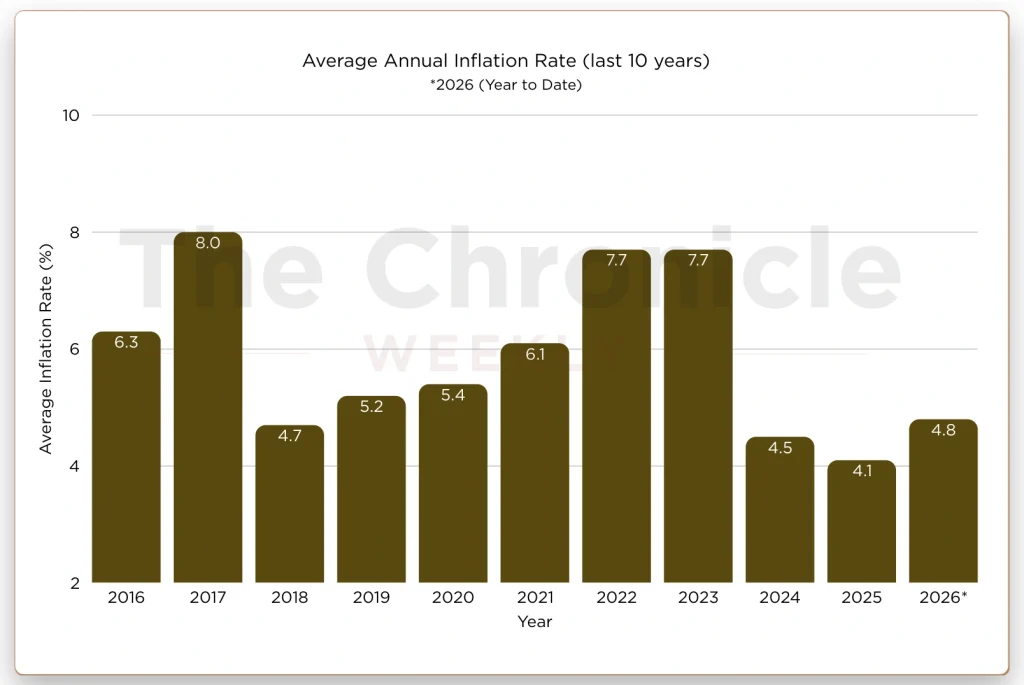
For much of 2025 and 2026, the government’s economic messaging has rested on a series of encouraging macroeconomic indicators. Inflation has eased from the highs that followed the global commodity shocks of 2022 and 2023.
The shilling has staged one of Africa’s strongest recoveries after its dramatic depreciation. Fuel prices have stabilised relative to the volatility of previous years, while foreign exchange reserves have improved, and investor confidence has shown signs of returning.
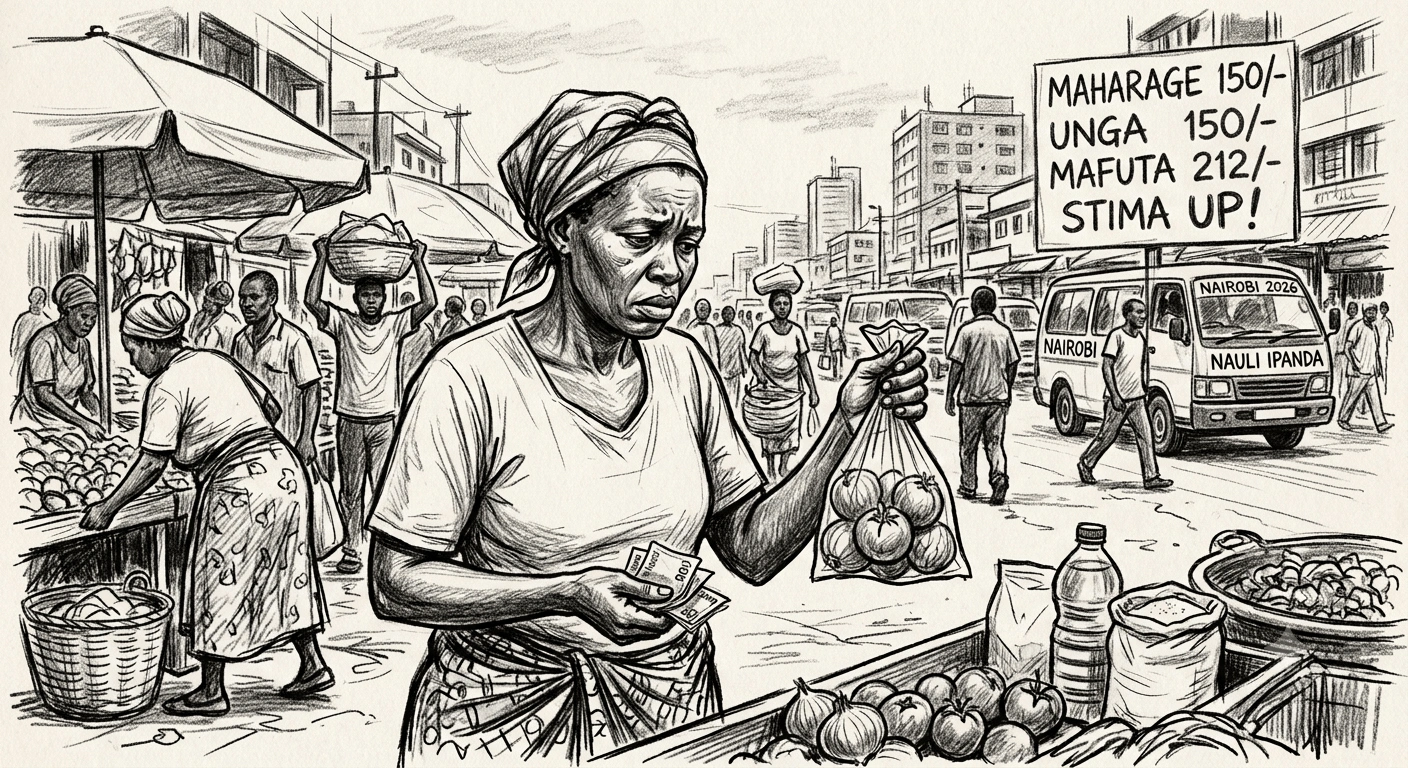
On paper, the economy appears to be finding its footing. Yet ask the average Kenyan about the economy and the response is strikingly different. By the numbers on a payslip or a shopping receipt, the economy is not improving.
Even among the formally employed, conversations increasingly revolve around side hustles, delayed investments and postponed major purchases.
The contradiction raises an important question. If the economy is improving, why do so many people feel poorer?
The answer lies in the difference between economic stabilisation and household prosperity. Governments often celebrate improvements in national indicators because they signal that an economy is becoming more resilient.
Households, however, judge the economy by a far simpler metric: whether there is more money left at the end of the month than there was a year ago. For many Kenyans, that answer remains no.
Stability Is Not the Same as Prosperity
The first explanation is that inflation measures the rate at which prices are rising, not whether prices have returned to previous levels. A loaf of bread that increased from Sh60 to Sh80 does not become cheaper simply because inflation falls.
Consumers continue paying the higher price, and unless their incomes rise proportionately, purchasing power remains diminished. Lower inflation is undoubtedly positive because it creates a more predictable environment for businesses and households alike.
However, stabilising prices after several years of sharp increases does little to repair the erosion of purchasing power that has already occurred. The cumulative effect of higher food prices, transport costs, school fees and housing expenses continues to weigh heavily on household budgets.
Compounding this challenge is the reality that wage growth has lagged behind the increase in living costs. Outside a handful of sectors, salaries have remained relatively stagnant while everyday expenses have climbed steadily.
Even households that have maintained their income levels effectively find themselves earning less in real terms because each shilling purchases fewer goods and services than it did just a few years ago.
Bury the headline growth rate and look instead at the Kenya National Bureau of Statistics’ real-wage index, which is pegged to June 2009 as its baseline of 100. As of the 2026 Economic Survey, that index stands at roughly 85.84.
Stripped of jargon: the average formal-sector Kenyan worker is, in inflation-adjusted terms, poorer today than a worker was seventeen years ago. GDP per capita has climbed to a nominal $2,714 in 2026.
Real purchasing power for the people actually drawing salaries has gone backward. Both are true at once, and the second one is closer to what people feel when they queue at the till.
There is a genuine complication worth stating honestly: the average nominal earnings per employee increased to Sh678,800 in 2025, up from Sh665,400 in 2024.
Real average earnings actually posted a growth of 2.0 per cent in 2025 due to cooling annual inflation (averaging 3.8 per cent), which reversed the 0.3 per cent decline from 2024. However, the baseline long-term index relative to 2009 remains negative due to cumulative structural inflation.
Kenya’s inflation basket is not neutral across income groups, and this is where the felt experience diverges most sharply from the headline rate. Annual consumer price inflation was 6.5 per cent in July 2026, as measured by the Consumer Price Index.
This implies that the general price level was 6.5 per cent higher in July 2026 than it was in July 2025.
The price increase was primarily driven by a rise in prices of items in the Food and Non-Alcoholic Beverages (9.0%); Transport (15.6%), and Housing, Water, Electricity, Gas and Other Fuels (3.2%) over the one-year period.
These three divisions together account for over 57 per cent of the total weight across the 13 major expenditure categories. followed.
These are not discretionary line items but the fixed costs of getting to work and feeding a household, and they consume a far larger share of a low or middle-income budget than of a wealthy one; even though the CPI, by design, averages across the whole population.
The Expanding Cost of Everyday Life
Taxation has become another defining feature of household economics. Over the past three years, new taxes and levies have expanded government revenue but have also reduced disposable income.
The Housing Levy, higher fuel VAT, increased excise duties and adjustments across various tax categories have altered how much money ultimately reaches consumers’ pockets.
For many households, the issue is not any single tax but the cumulative effect of multiple deductions. Combined with rising utility costs, digital service charges, education expenses and healthcare contributions, these obligations have fundamentally reshaped monthly budgeting.
Housing presents another source of pressure. Rent continues to consume an increasing share of household income in urban centres, even as mortgage financing remains inaccessible for many middle-income earners.
Home ownership, once viewed as an achievable aspiration, feels increasingly distant for younger professionals navigating high interest rates and elevated property prices.
The result is a growing perception that financial progress requires significantly more effort than before. Income that might previously have supported modest savings or discretionary spending is now absorbed by essential expenses before the month is halfway through.
Growth Without Broad-Based Gains
Kenya’s economy continues to produce areas of impressive growth. Financial technology remains vibrant, tourism has rebounded strongly, agriculture has benefited from improved weather conditions, and infrastructure investment continues across multiple sectors.
Yet these gains have not translated evenly across the labour market. Perception is not merely psychological; it influences economic behaviour.
When millions of consumers simultaneously choose to spend less, economic activity slows further, reinforcing the very anxieties that prompted caution in the first place.
The government’s emphasis on macroeconomic stability should not be dismissed. Stable exchange rates, lower inflation and improved fiscal discipline create the conditions necessary for long-term growth.
However, these achievements represent the beginning rather than the end of economic recovery.
Ultimately, households will judge success through tangible improvements in employment opportunities, rising incomes, affordable housing, accessible healthcare and greater purchasing power.
The challenge facing policymakers is therefore not simply sustaining macroeconomic stability but ensuring that growth becomes broad-based enough for ordinary Kenyans to experience it directly.
Only then will the country’s improving economic indicators begin to align with how its citizens actually feel.