





For years, the digital creator’s dream was simple: to go viral. However, a quiet revolution is taking place in the creator economies of Kenya and Nigeria, where trust is valued more highly than millions of followers.
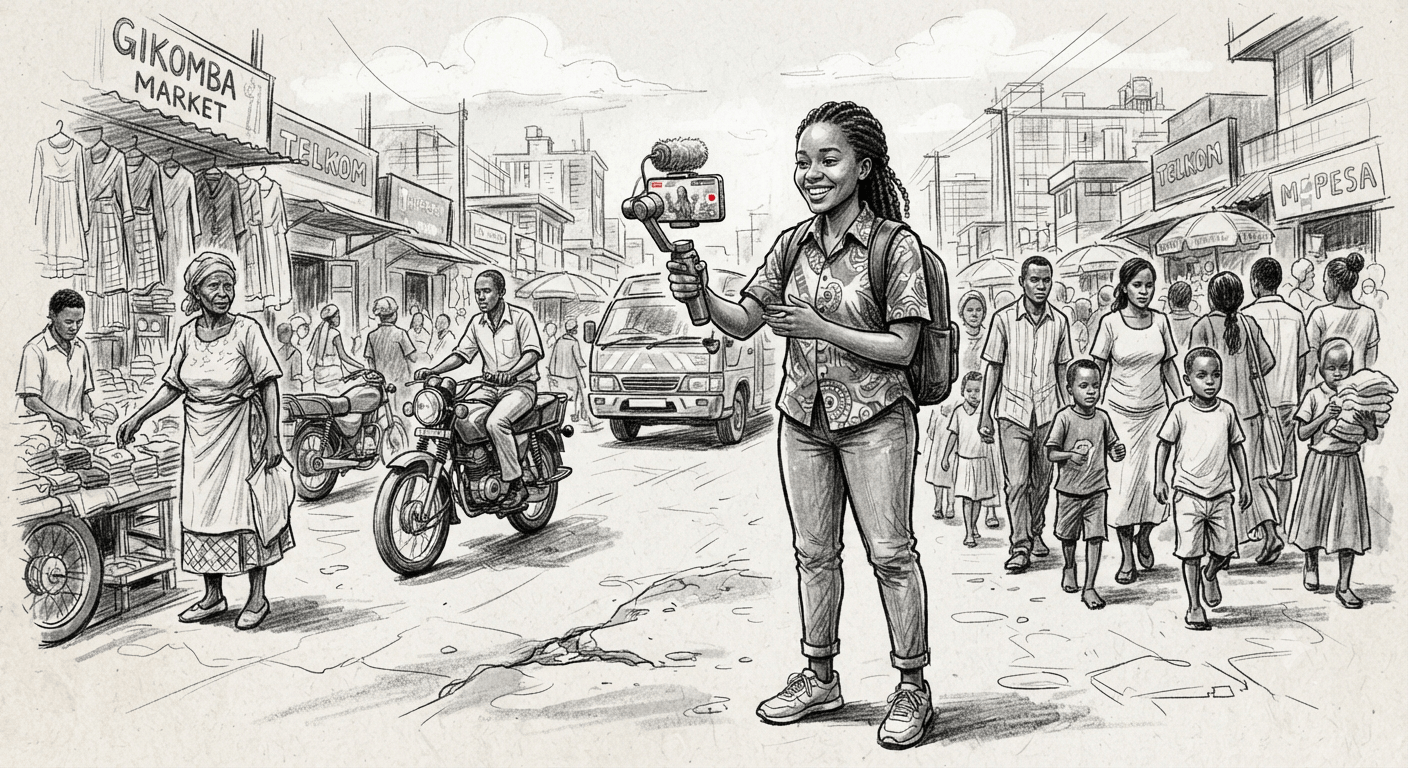
A new wave of storytellers is emerging, armed with nothing more than a smartphone and a fiercely loyal community of just a few thousand people. They are nano-influencers, and they are proving that, in the crowded digital landscape, the most powerful voice is often the one that speaks directly to you.
In the traditional model, influence was a numbers game. A mega-influencer with millions of followers could command substantial fees, offering brands access to a vast, albeit somewhat imprecise, audience.
However, as audiences grow weary of polished, impersonal content, the maths are changing.
The Power of Small Communities
In Kenya, nano-influencers, defined as social media users with between 1,000 and 20,000 followers, are reshaping the marketing landscape. These creators, who are typically aged between 18 and 30, demonstrate that a smaller, more engaged audience can generate higher levels of engagement, resulting in more meaningful conversations, product trials and brand loyalty.
According to the landmark report Ecosystem Mapping of Storytellers: Film, Television and the Creator Economy Landscape in Nigeria and Kenya, published in June 2026 by CcHUB Creative Economy Ltd with support from the Bill & Melinda Gates Foundation, reveals that the creator economy is evolving rapidly across both nations.
Analysing nine key locations in Kenya, including Nairobi, Mombasa, and Kisumu, and in Nigeria, including Lagos, Abuja, Kano, Ibadan, Asaba/Onitsha, and Port Harcourt, the report reveals a sector that is both economically significant and structurally fragile.
In Kenya, the report notes that digital creators are estimated to have earned $49.5 million (Sh6.4 billion) in 2022, with the country boasting one of the highest growth rates in internet advertising globally.
Meanwhile, Nigeria’s creator economy is now valued at over USD31.2 million (Sh4 billion), making it the nation’s third-largest entertainment sector after music and film/TV. The nano-influences are reshaping the marketing landscape.
In Kenya, a 2023 Geopoll study cited in the report found that a staggering 94.87 per cent of social media users followed or subscribed to a content creator’s channel, with 80.39 per cent having made purchases based on the content creator’s marketing recommendations.
This signals that influence is no longer about raw numbers but about trust and relatability.
The Authenticity Advantage
The core of the nano-influencer’s power is authenticity. In 2026, audiences are tired of sales pitches; they want stories. They crave connection with real people, not distant celebrities with unattainable lives.
The report’s survey findings support this shift. Across both countries, filmmakers, TV producers, and digital creators identified cultural nuances, family, poverty, and social injustice as dominant themes in their storytelling. These are not abstract topics but lived realities; the very fabric of everyday life that resonates most deeply with local audiences.
This is where nano-influencers thrive. Their smaller followings allow for genuine, two-way conversations. A recommendation from a nano-influencer feels like advice from a trusted friend.
A fashion brand in Ibadan, Nigeria, leveraging WhatsApp and Instagram nano-influencers to drive sales during festive seasons, saw more engagement than they had from radio ads. The result is a powerful, performance-driven form of marketing that links spend directly to sales outcomes.
This new model is creating a more accessible and equitable playing field. Platforms like Twiva in Kenya are enabling small and medium-sized businesses to market and sell products through networks of micro and nano influencers.
Similarly, initiatives like the Dentsu School of Influence are empowering the next generation of creators, equipping them with the skills to navigate brand relations.
This represents a fundamental shift in the creator economy, moving from awareness-based marketing to a more direct, performance-driven commerce.
The Roadblocks to Growth
While the influence is real, the path to monetisation is not always easy. The report highlights that creators often face significant financing constraints. In Kenya, 63 per cent of content creators reported significant financing challenges, limiting access to quality production equipment and professional services.
The situation is similar in Nigeria, where approximately 65 per cent of survey respondents identified funding as a major hurdle affecting content quality, consistency, and scalability.
This is particularly true for nano-influencers who are just starting and may not have the resources to invest in high-quality equipment or professional services. As the report notes, “emerging content creators typically handle the entire content production process themselves, and may rely on smartphones, free or low-cost editing apps and DIY setups for filming.”
The report also reveals interesting regional dynamics. In Kenya, creators in Mombasa have better access to loans from banks and other financial institutions as a result of tourism-oriented initiatives, while Nairobi remains the hub for private investment and corporate sponsorships.
The report notes that professional associations for creators are fragmented or non-existent, leaving many without a unified voice to advocate for better policies or fairer compensation.
In Kenya, a recent attempt to register the Association for Digital Content Creators failed largely due to mistrust and concerns over government interference.