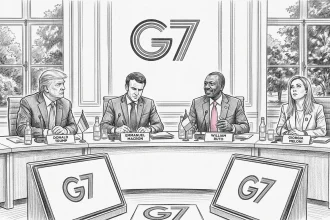



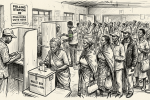


If one judged Kenya solely by its political conversation today, one would conclude that there is only one election worth discussing in 2027: the presidential election.
Every headline is about who will face President Ruto. Every poll measures presidential popularity. TV debates revolve around coalition arithmetic, regional voting blocs and succession calculations. Political rallies are analysed through the prism of State House. Even conversations in matatus, barbershops and WhatsApp groups inevitably return to one question: who becomes president?
Yet there is another election taking place on the same day that will have a greater influence on how millions of Kenyans experience government over the next five years.
At the 2027 election, Governors will be elected, and County Assemblies will be constituted after MCAs, elected in the same election, assume office.
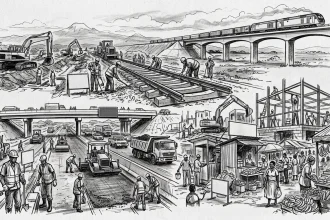
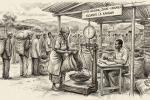
Those offices will oversee hundreds of billions of shillings in public spending, supervise hospitals, maintain county roads, regulate markets, manage agricultural extension, oversee urban planning, control waste management, and determine whether local services actually function.
In theory, devolution transformed Kenya into a country with 48 governments: one national government and 47 county governments. In practice, political attention has remained stubbornly centralised.
The paradox of Kenyan democracy is that voters obsess over the election that influences their daily lives the least while largely ignoring the elections that shape them the most.
The Politics Of Visibility
This imbalance is not entirely irrational; presidential politics has been dramatic. It has clear protagonists, simple narratives and obvious winners and losers. TV producers can fill hours discussing coalition negotiations, pollsters can produce weekly presidential rankings, and analysts can endlessly speculate about regions and ethnic arithmetic.
County politics is messier. There are 47 gubernatorial contests, 1,450 MCA races and dozens of county-specific issues that rarely lend themselves to national storytelling.
Covering county governance requires reporters to understand procurement, budgeting, health financing and local legislation. It requires sustained attention rather than episodic excitement.
National politics, by comparison, is easier as it generates conflict, personalities and spectacle. Those ingredients attract audiences, which attract advertisers, which justify further coverage. The result is a political ecosystem where media economics reinforce political centralisation.
The more national politics dominate coverage, the less space remains for examining what county governments are actually doing.
When Kenyans overwhelmingly endorsed the 2010 Constitution, they embraced one of Africa’s most ambitious devolution experiments.
The logic was straightforward since too much power had accumulated in Nairobi, and development across the country was uneven. By transferring functions and funding to counties, government would move closer to citizens while creating new centres of accountability.
More than a decade later, devolution has fundamentally altered public finance. Counties collectively manage hundreds of billions of shillings annually through equitable share allocations, own-source revenue and conditional grants.
Many sectors that affect everyday life, from primary healthcare to local roads, markets, early childhood education and agricultural support, are now county responsibilities.
Yet many citizens continue evaluating governance almost exclusively through the presidency. Hospitals without medicine become “government failures” without distinguishing whether the problem lies with county procurement or national funding.
Garbage collection failures become national political talking points despite being local government responsibilities. Poor urban planning, stalled county roads or malfunctioning markets rarely become defining electoral issues for governors or MCAs. Instead, they become ammunition in broader national political battles.
The Accountability Gap
This creates one of the most significant blind spots in Kenyan democracy. Governors know they will face voters every five years. MCAs know they can be removed through elections. County executives operate within legal oversight frameworks.
But accountability depends on scrutiny. When voters spend four years discussing presidential politics while paying little attention to county budgets, procurement decisions or assembly performance, local politicians gain room to operate without sustained public pressure.
County assemblies illustrate this problem particularly well since their constitutional role is not merely legislative. They approve budgets, scrutinise executive spending, vet appointments and investigate misuse of public resources.
An effective county assembly can prevent waste, expose corruption and improve service delivery. An ineffective assembly becomes little more than an extension of the governor’s office. Yet MCA elections rarely attract sustained public debate beyond personal popularity, clan dynamics or campaign patronage.
In fact, many voters cannot name their MCA’s legislative record, and some even their names. Few know how their representatives voted on major county budgets, and even fewer understand committee performance or attendance records.
National political actors have little reason to change this. Presidential campaigns thrive when politics becomes an emotional contest over personalities, identity and national direction.
County performance introduces uncomfortable specifics. Questions about completed roads, functioning dispensaries, procurement transparency, stalled projects and budget absorption require evidence rather than slogans.
For governors with poor performance records, national political noise becomes politically convenient. A governor aligned with the ruling coalition can frame criticism as attacks on the president.
An opposition governor can attribute every failure to inadequate funding from Nairobi. Both narratives shift attention away from local decision-making.
Instead of asking whether a governor managed county resources effectively, campaigns revolve around which presidential candidate the governor supports.
Instead of debating health outcomes, urban planning or agricultural productivity, elections become referendums on national political alliances.
The governor becomes a proxy for presidential politics rather than a candidate for county leadership, and that serves politicians far better than it serves citizens.
The question is why voters often devote ten times more attention to presidential politics than to institutions responsible for many of the services they use every week.
Media’s Unfinished Assignment
The media bears part of the responsibility as more often than not election overage mirrors campaign strategy. Presidential candidates receive constant live broadcasts, coalition negotiations become breaking news and political defections dominate front pages.
Meanwhile, county reporting frequently appears only when scandal erupts. Counties will mainly make news during procurement investigations, corruption arrests, impeachment attempts and major political conflict.
Routine governance receives comparatively little sustained attention. How effectively did counties spend development funds?
Which county assemblies produced meaningful legislation? Which governors improved healthcare outcomes? Which counties expanded own-source revenue without overburdening residents? Which procurement systems delivered better value?
These stories rarely generate the same attention despite having greater long-term significance and that imbalance shapes public priorities.
Kenya may need a different hierarchy of political importance. Instead of viewing gubernatorial and MCA elections as supporting acts for the presidential race, voters could reverse the equation.
The success of devolution was never supposed to depend solely on transferring money from Nairobi, it also depended on transferring attention.
On creating citizens who followed county budgets as closely as Cabinet appointments. Who questioned governors as intensely as presidents. Who expected MCAs to legislate rather than simply mobilise crowds during campaigns.
As Kenya edges towards another election cycle, presidential politics will continue dominating headlines.
Coalitions will form and fracture, opinion polls will trend across social media, and every speech will be interpreted through the lens of 2027 arithmetic. Those stories deserve coverage.
But they should not eclipse the contests that determine whether the nearest hospital has medicine, whether county roads remain passable after the rains, whether markets receive investment, or whether local taxes produce visible public value.