



For decades, Kenya has been exceptionally good at producing athletes and remarkably poor at building an industry around them. The country has won Olympic medals, dominated distance running, produced world champions and built a global reputation in athletics, yet much of the economic value generated by Kenyan sporting talent has historically been captured elsewhere.
Athletes train and compete abroad, international broadcasters sell the competitions, foreign brands build commercial relationships around Kenyan stars, while local sporting institutions continue to struggle with facilities, governance and sustainable financing.
William Ruto wants to change that equation.
The President has increasingly framed sport not simply as recreation or a source of national pride, but as an economic sector capable of creating jobs, attracting investment, supporting tourism, developing talent and generating commercial opportunities.
In May 2026, he argued that Africa needed to build African-owned sports industries rather than remain on the margins of a global business built around broadcasting, manufacturing, technology, tourism and talent. Kenya, he said, had deliberately placed sports within the Bottom-Up Economic Transformation agenda.
That is an important shift in ambition because Kenya’s sporting problem has never been a shortage of talent.
It has been the failure to build enough economic infrastructure around that talent. The question for the Ruto presidency is therefore whether Kenya can move from sporting success to sports economics.
Stadiums Are Only The Beginning
The most visible expression of the government’s sports strategy is infrastructure. Talanta Sports City, the renovated Kasarani complex, Nyayo Stadium and a wider programme of county facilities have become central to Kenya’s preparations for the 2027 Africa Cup of Nations, which Kenya will co-host with Uganda and Tanzania.
The government has also announced plans for 30 sports academies and additional stadia, arguing that infrastructure should provide young talent with pathways into elite competition.
The scale of the investment is significant. The 2026 allocation for development and management of sports facilities stands at about Sh25.8 billion, compared with Sh16.3 billion in 2022, although the increase also reflects the extraordinary demands created by AFCON preparations.
Talanta is intended to be more than a football ground, with government plans envisaging a wider sports ecosystem around the 60,000-capacity stadium that includes training facilities, hospitality, commercial spaces and media production infrastructure.
The President has explicitly described the ambition as building integrated commercial ecosystems rather than merely constructing venues. That is the right way to think about sports infrastructure.
A stadium that is used for perhaps 30 football matches a year is an expensive piece of concrete; a stadium surrounded by restaurants, retail, hotels, conferences, entertainment, digital broadcasting, sports medicine, academies and events can become an economic asset.
The challenge is making sure Kenya builds the second rather than simply the first.
AFCON Will Be The Test
The 2027 Africa Cup of Nations offers Kenya an opportunity that comes around only rarely.
Major sporting events can generate spending on accommodation, transport, food, entertainment, broadcasting, security and tourism, while exposing local businesses and sporting talent to international markets. But hosting a tournament does not automatically create a sports industry.
The stadiums must be completed and maintained, broadcasting infrastructure must work, transport systems must cope with spectators, hospitality businesses must be able to capture demand, local suppliers must have access to procurement, and Kenyan media companies must be positioned to monetise the attention.
Most importantly, the infrastructure must remain economically useful after the final whistle. That is where Kenya’s history with large public facilities should make policymakers cautious.
The country has built impressive venues before, only for maintenance, utilisation and commercial management to become afterthoughts. AFCON therefore needs to be treated not as a three-week event but as a launchpad for a much larger sports economy.
The government’s own numbers show why this matters. In May 2026, officials told Parliament that an additional Sh11.02 billion was required to complete key AFCON stadium projects, with contractual commitments significantly ahead of payments already made.
That funding pressure is a warning that Kenya cannot afford to spend heavily on venues for an event and then discover that it has built expensive facilities without a sustainable business model.
Real Opportunity Is Beyond Football
Football will dominate the AFCON conversation, but Kenya’s sporting economy cannot be built around one sport.
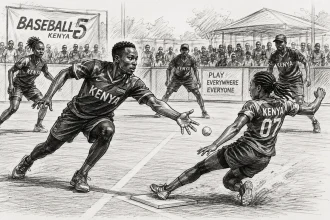
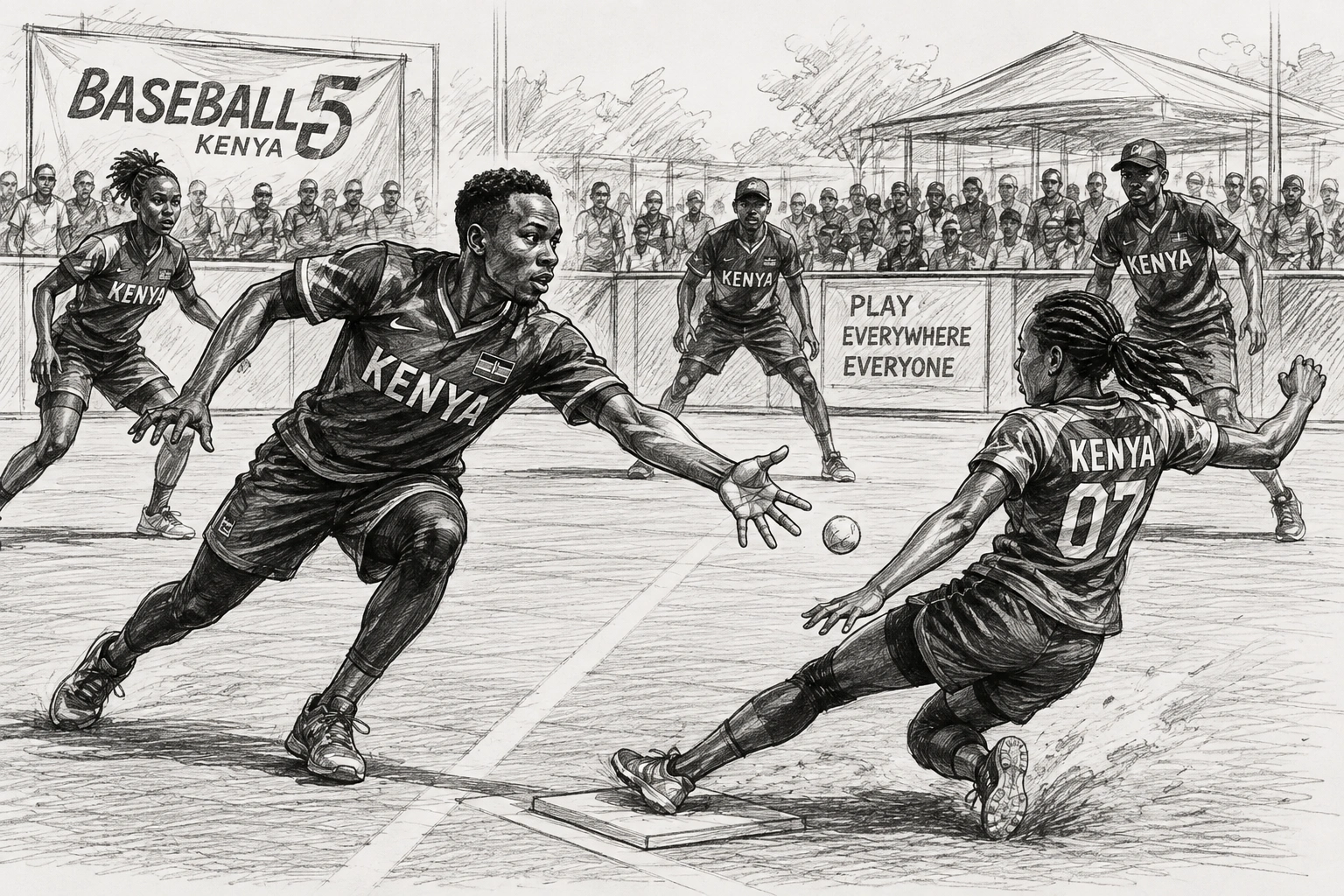
The country’s strongest global sporting brands remain athletics, rugby, volleyball, boxing and increasingly basketball, alongside emerging disciplines such as Baseball5.
That diversity creates opportunities across the entire sports value chain, including coaching, sports science, fitness, equipment manufacturing, media, data, merchandising, event management, sports tourism, athlete representation and broadcasting.
Kenya’s greatest underdeveloped asset may therefore not be its stadiums but its knowledge.
The country produces elite athletes who train under coaches, physiotherapists, nutritionists, managers and support teams with expertise that has global value, yet much of that expertise remains fragmented and informal.
A serious sports industry would turn that knowledge into institutions: universities could build stronger sports-science programmes, academies could become commercial talent-development businesses, Kenyan companies could manufacture equipment and apparel, broadcasters and digital platforms could build local sports content, and athletes could become investors rather than simply endorsers.
That would create a much deeper economic footprint than the construction of another stadium.
Athlete Must Become An Economic Asset
This is perhaps the biggest test of the government’s ambition. Kenya has historically treated athletes primarily as representatives of the nation.
They win medals, appear at State House, receive honours and occasionally receive financial rewards. But an industry treats talent differently: it builds systems around it.
An elite athlete generates value for coaches, agents, broadcasters, sponsors, apparel companies, event organisers, hotels, airlines, nutrition businesses and digital platforms.
If Kenya wants a sports economy, more of that value needs to remain within the country. This requires better athlete welfare and governance as much as it requires infrastructure.
The draft Sports Bill 2026 and National Sports Policy 2025 recognise some of these longstanding weaknesses, including athlete welfare, sports integrity, federation governance, infrastructure and talent development.
The government has explicitly said it wants to reposition sport from a largely recreational activity into a structured industry capable of generating employment and livelihoods.
That is potentially more consequential than any single stadium because Kenya does not have a problem producing another world champion. Its problem is building a company, institution or industry around that champion.
The Money Has To Follow The Talent
There is another reason the sports-industry argument matters. Young Kenyans do not need to become Olympic champions to benefit from sport.
A functioning sports economy creates jobs for people who will never compete at the highest level: coaches, physiotherapists, psychologists, nutritionists, groundskeepers, referees, administrators, journalists, photographers, broadcasters, designers, marketers, lawyers, accountants, data analysts and technology specialists.
That makes sport particularly relevant to Ruto’s youth employment agenda. The President’s broader argument is that Kenya’s young population represents an economic opportunity, and sport is one of the few sectors where Kenya already possesses an internationally recognised competitive advantage.