





The formal position of Kenya’s opposition, stated repeatedly by its principals over the past several months, is simple: whoever eventually emerges as the coalition’s presidential candidate will get everyone else’s backing.
It is a clean, disciplined message, the kind designed to project unity to a public that has watched opposition coalitions fracture at exactly this stage of the cycle before.
It is also, increasingly, a message being delivered from the top of a structure that is not moving at the same speed as what is happening underneath it.
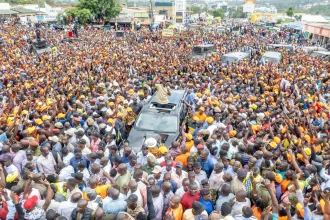
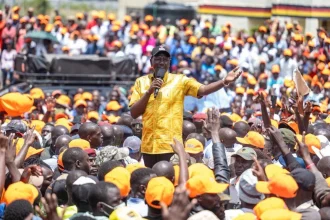
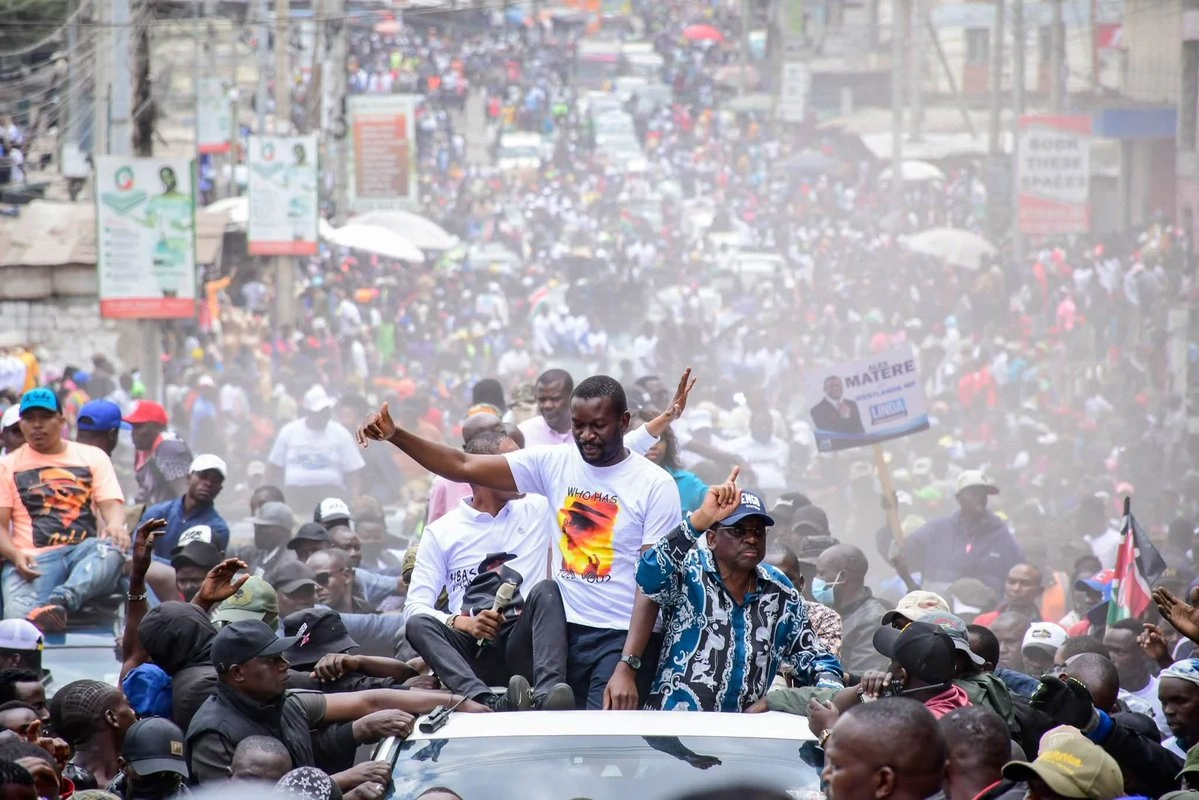
On September 13, thousands gathered in Nairobi for a rally led by Edwin Sifuna, the former ODM secretary-general, who used the platform to renew his call for opposition unity.
That is consistent with the official line. What is less consistent is what has been happening in parallel, led by people who are ostensibly part of the same unity project.
Rigathi Gachagua has spent the same period consolidating a diaspora base of his own — organising specifically among Kenyans abroad, a constituency with its own financing capacity and its own political weight — while publicly praising Sifuna, Kalonzo Musyoka, and Babu Owino for their rally activity.
Kalonzo, meanwhile, has been organising directly in Northern Kenya, a region with its own distinct political arithmetic and historical loyalties that don’t automatically transfer through a Nairobi rally or a diaspora WhatsApp network.
Three separate figures. Three separate mobilisation efforts, in three separate constituencies, each building a base that is, in practice, loyal to them individually rather than to a coalition structure that has not yet told anyone which of them it intends to back.
Gachagua’s praise for the others’ organising is not the same as ceding ground to them. It reads more like a politician acknowledging that his rivals are doing real work, while continuing to do his own.
A Different Problem
Kenyan opposition coalitions have a familiar failure mode, and it is tempting to slot this into it: principals talk unity, egos get in the way, the coalition splinters closer to the election than anyone wants, and the story writes itself as a repeat of prior cycles.
That framing is not wrong, exactly, but it is incomplete, and it risks missing what is actually new about this moment. The failure mode this cycle is not obviously ego or personal rivalry — at least not yet, and not publicly. Gachagua’s warm words for his rivals suggest, if anything, an attempt to manage the appearance of rivalry carefully.
The more structural problem is that mobilisation and coalition-building are running on different clocks entirely. Rallies, diaspora organising, and regional base-building are all things individual politicians can do unilaterally, immediately, with resources they already control.
Agreeing on a single presidential candidate is something that requires all three of them, plus whichever other principals are in the room, to accept losing.
The first kind of activity is happening now, visibly, at scale. The second kind of activity has, as far as the public record shows, not produced any joint statement, timeline, or mechanism since the September 13 rally.
That gap is the actual story. An opposition coalition can survive individual politicians building their own bases, right up until the point where those bases have grown large and loyal enough that none of the three is willing to hand his over to whichever one the coalition eventually selects.
The longer coordination lags behind mobilisation, the more expensive unity becomes to deliver later, because it stops being a negotiation between principals and starts being a negotiation between principals and constituencies that have been organised to expect their guy is the one who’s going to win.
What To Watch Next
There is no public evidence yet that this has tipped into open competition — Gachagua’s public praise for the other rally organisers is, if anything, evidence of restraint.
But restraint under these conditions is not the same as coordination, and the distinction matters for anyone trying to read where this goes next.
The next genuine test is not another rally; Kenya’s opposition figures are demonstrably capable of drawing crowds independently, and another one won’t tell us anything new.
The test is whether any joint mechanism — a shared platform, a public timeline for selecting a candidate, a visible sequencing of how Sifuna’s Nairobi base, Gachagua’s diaspora network, and Kalonzo’s Northern Kenya organising are meant to eventually merge into one campaign — appears before each of those bases has hardened into something its builder is unwilling to give up.
Until that mechanism exists, the honest description of the opposition’s position is not “united behind whoever wins the nomination.”
It is three separate, well-resourced mobilisation projects, operating on parallel tracks, whose builders have agreed in principle to merge them at some undefined future point.
Whether that principle survives contact with an actual nomination process is the question this piece can’t yet answer — and neither, on current evidence, can the coalition itself.