





The optics were well-managed. On June 22, President Ruto stood before thousands of coffee farmers at General Kassam Stadium in Kirinyaga and announced that more than Sh1 billion in debts owed by 14 cooperative societies in the county would be written off.
Kirinyaga Governor Anne Waiguru, who had been lobbying for the waiver for months, welcomed the announcement. Deputy President Kithure Kindiki praised the county as a model for the rest of the country.
Ruto said the Sh2 billion set aside in the 2026/27 budget for coffee debt relief would be released on June 23, when he signed the Finance Bill into law, “not at the end of the month.”
The timing was crisp, the message was clear, and the crowd was large. Whether it amounts to structural reform is a different question.
Verified debt waiver requests from coffee cooperative societies across the country total Sh6.8 billion. The Sh2 billion allocated in the current budget covers less than a third of that figure.
Cooperatives Cabinet Secretary Wycliffe Oparanya has acknowledged the gap, saying the government will begin with verified claims and clear remaining debts in subsequent budget cycles.
That is a reasonable position, but it means the debt relief being celebrated in Kirinyaga is a down payment on a much larger liability, not a resolution of it. The debts themselves are a symptom rather than the disease. Financial irregularities within coffee cooperatives have led to payment delays and eroded farmer trust.
Poor governance, weak regulatory oversight, low member participation, inadequate access to credit, market inefficiencies, and misaligned leadership incentives have compounded these challenges and directly limited farmers’ access to the resources and services they need.
Writing off what cooperatives owe their creditors today does not change the governance structures that allowed those debts to accumulate in the first place.
Payment reform that went to court
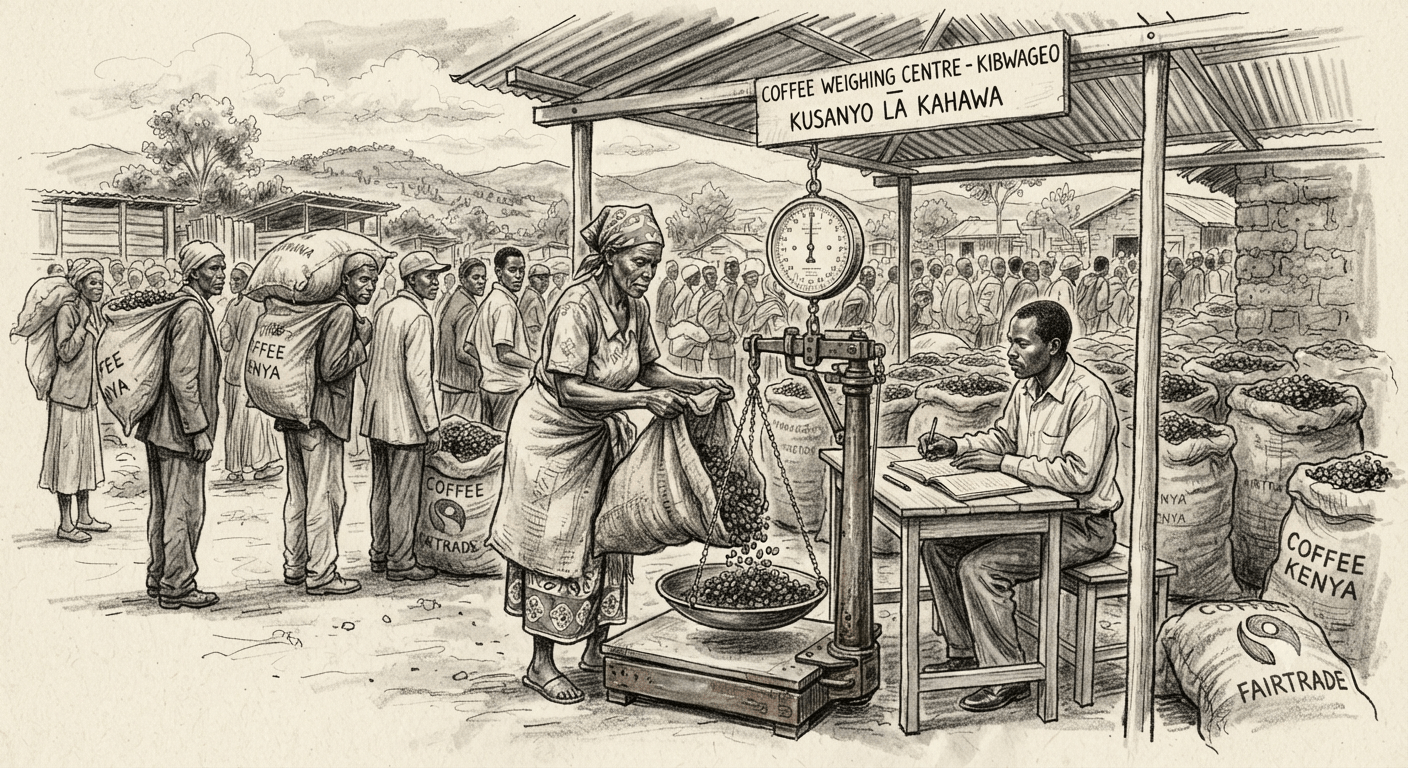
The government’s most operationally significant intervention in the coffee sector has been the Direct Settlement System, which routes payments directly to farmers via the Nairobi Coffee Exchange rather than through cooperative societies, accused of delays and deductions.
Between October 2024 and April 2025, the DSS facilitated the sale of 535,941 bags of coffee worth Sh27.6 billion, and payment periods were shortened significantly. On the face of it, a meaningful result. But the rollout has been contested.
The National Coffee Cooperative Union rejected the DSS, arguing it threatens to dismantle cooperative structures central to farmer operations, and a High Court in Kerugoya suspended the system’s implementation until May 2026, citing insufficient public participation.
The government pressed ahead at Kassam Stadium without addressing that underlying complaint directly, that reforms designed to benefit farmers were being implemented without adequately consulting them.
Ruto’s announcement of a five-day payment window under the new Direct Settlement framework repeats a commitment the government has made several times since 2023. The question is not whether it is a good idea, but whether the institutional scaffolding to enforce it is in place.
The Coffee Act 2025 introduces a 10 per cent cap on cooperative deductions, a Price Stabilisation Fund to cushion farmers during periods of volatile global prices, and structured dispute resolution committees required to make determinations within 30 days.
These are substantive provisions. If enforced, they would address some of the most chronic grievances in the sector. The law also revives the Coffee Board of Kenya as a regulatory body, restoring an institutional anchor that had been absent for years.
The gap between legislation and implementation is, historically, where Kenya’s agricultural reform agenda has stalled. The government’s target is to triple national coffee production from the current 50,000 metric tonnes to 150,000 by 2028, with at least 80 per cent of proceeds from coffee sales paid directly to farmers.
Those are ambitious figures. Kirinyaga’s production has grown from 28,000 to 49,100 metric tonnes over eight years, an encouraging trajectory, but it is one county, with relatively strong governance and an active county government pushing the agenda. Replicating that across 34 coffee-growing counties by 2028 requires more than a stadium rally.
The package announced in Kirinyaga runs beyond the debt waiver. An additional Sh1 billion will go to counties to modernise coffee factories, and a further Sh1 billion will support the production and distribution of quality seedlings.
Coffee prices at the farmgate have risen, from around Sh50 per kilogramme two years ago to as high as Sh158 in some factories, and Ruto has set a target of Sh250. Premium
Arabica from Kirinyaga has fetched over Sh1,700 per kilogramme at the Nairobi Coffee Exchange for AA-grade lots, demonstrating that the ceiling is real. The gap between that ceiling and what most farmers actually receive is where the value chain still leaks.
The election in the room
None of this happens in a political vacuum. The announcement came on June 22, thirteen months before the 2027 general election. The President used the same platform to defend the Finance Bill 2026, criticising legislators who opposed it as spreading misinformation about a law he said contained direct benefits for farmers.
It was a governing event that also functioned as a political rally, which is not unusual, but worth noting when assessing the durability of the commitments made there.
The coffee sector’s structural problems – cooperative governance failures, payment system disputes, and a production base that remains far below the 1980s peak will not be resolved by a debt waiver, however large, or a production target, however ambitious.
They will be resolved by consistent regulatory enforcement of the Coffee Act 2025, sustained investment in processing infrastructure, and a payment system that farmers themselves trust.