




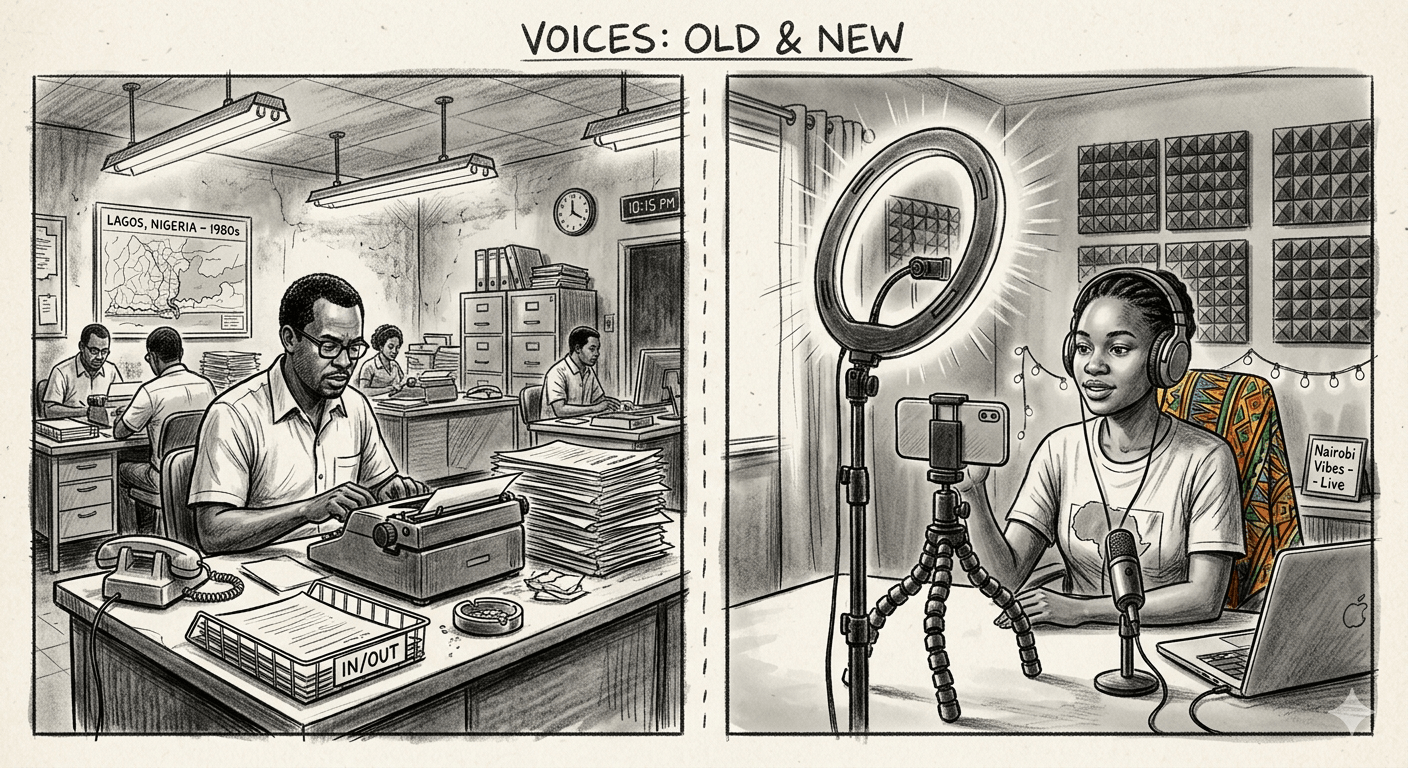
There is a moment in every media disruption when incumbents stop dismissing the threat and start studying it. Kenyan television stations reached that moment somewhere around 2022, when they noticed that a TikToker with a smartphone and a ring light was pulling more views on a single video than their primetime bulletin.
That moment has passed. What follows is harder. Kenya’s creator economy is no longer an emerging trend. It is an established industry, one that runs on advertising money, brand partnerships and subscription revenue, employs production teams and audio engineers, and commands audience loyalties that traditional outlets have spent decades trying to build.
The question is not whether creators have arrived. It is whether the institutions that once defined Kenyan media, the broadcasters, the newspaper groups, the radio networks, can adapt fast enough to survive the shift.
Follow the Money First
The clearest evidence of structural change is not in the content. It is in the advertising budgets. Brands are reallocating. Where marketing spend once went automatically to television and radio, procurement teams now carve out influencer budgets as a distinct line item.
A finance creator with 200,000 highly engaged followers is, by the metrics that matter to a bank or an insurance company, more valuable than a primetime slot reaching three times that audience passively.
The economics are simple. Creators connect with targeted audiences. Brands invest in targeted audiences. The money flows where the targeting is. This has created genuine specialisation. Finance influencers attract banking and investment partnerships.
Travel creators work with tourism operators and airlines. Tech reviewers collaborate with device manufacturers. Lifestyle creators, the fastest- growing segment, partner with consumer goods companies seeking cultural relevance with younger demographics. None of this is theoretical.
It is happening now, in Nairobi and Mombasa and in the rural towns where a podcaster with a good microphone and a consistent release schedule has built a listenership that no local FM station thought to compete for.
The Infrastructure Is Real
What distinguishes the current moment from the earlier phase of Kenyan content creation is professionalisation. The hobbyist period, posting for fun, hoping for views, has not disappeared, but it is no longer the defining characteristic of the sector.
The creators building sustainable businesses are operating with production schedules, content calendars, commercial teams and, in several cases, physical studio facilities. Some employ three to ten people. A few employ more.
The line between a content creator and a media house is now a matter of paperwork. This matters because it changes the accountability question.
When a YouTube channel reaches a million subscribers, it is not a blogger. It is a publication. When a podcast generates Sh500,000 a month in sponsorship revenue, it is not a hobby. It is a business.
The regulatory and tax frameworks have been slow to recognise this, but they are catching up, and creators who built their operations in the grey zone of informal enterprise are now discovering that formalisation has costs as well as protections.
Pressures the Success Stories Don’t Mention
For every creator with a studio and a team, hundreds are operating on inconsistent income, algorithmic uncertainty and no safety net. Platform algorithms remain the single largest structural risk in the sector.
A policy change at YouTube or TikTok, a shift in how revenue is calculated, or a change in content moderation thresholds can reduce a creator’s income overnight with no warning and no appeal process.
The platforms are headquartered elsewhere. Their monetisation policies are designed for other markets. Kenyan creators operating in Swahili or regional languages frequently find themselves below the thresholds that unlock revenue features available to English-language creators in larger markets.
The mental health dimension is real and underreported. Sustained audience attention requires sustained output. The pressure to post, to maintain engagement metrics, to respond to comments and remain visible across multiple platforms simultaneously is not incidental to the work; it is the work. The burnout rate among mid-tier creators is high.
What Comes Next
Traditional media is not finished. But it is in a period of forced renegotiation, of audience relationships, of revenue models, of editorial authority.
The broadcasters and newspaper groups that will survive the next decade are those that understand creators not as competition to be absorbed or dismissed, but as a structural reality to be built around.
For policymakers, the challenge is framing. The creator economy does not fit neatly into existing categories. It is not broadcasting. It is not publishing. It is not advertising. It is all three, simultaneously, run by individuals rather than institutions.
Getting the regulatory framework wrong, either through over-reach or neglect, will cost Kenya the economic dividend it is currently positioned to capture. The sector is growing.
The talent is here. The infrastructure is being built. The only thing that can slow it down is a failure of institutional imagination.